
Introduction
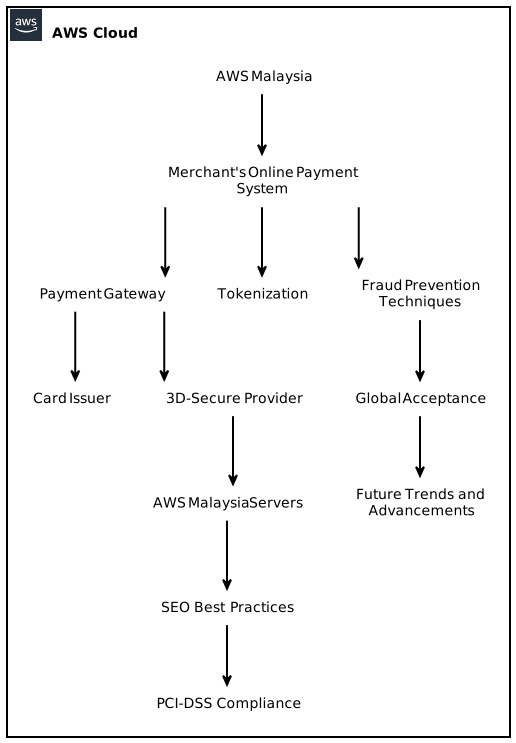
In the realm of secure online transactions, ensuring the protection of credit and debit cards is of utmost importance. To strengthen security measures and combat payments fraud, Amazon Web Services Malaysia Sdn. Bhd. (AWS Malaysia) has introduced support for 3D-Secure authentication. This guide aims to provide a comprehensive understanding of 3D-Secure authentication, its benefits, implementation steps, and the impact it has on SEO. Additionally, we will explore additional technical relevant and interesting points that further enhance the understanding of this crucial authentication process.
Table of Contents
- Understanding 3D-Secure Authentication
- What is 3D-Secure?
- How does 3D-Secure work?
Benefits of 3D-Secure authentication
Implementing 3D-Secure Authentication with AWS Malaysia
- Eligibility and requirements
Step-by-step implementation guide
SEO Considerations for 3D-Secure Authentication
- Impact on search engine rankings
Implementing SEO best practices with 3D-Secure
Additional Technical Relevant and Interesting Points
- Role of PCI-DSS compliance
- Tokenization of card data
- Global acceptance of 3D-Secure
Fraud prevention techniques
Conclusion
- Summarizing the importance of 3D-Secure authentication
- Future trends and advancements in payment security
1. Understanding 3D-Secure Authentication
What is 3D-Secure?
3D-Secure is an authentication protocol that adds an extra layer of security to online credit and debit card transactions. It was developed by Visa and is now adopted by other major card schemes, such as Mastercard, American Express, and JCB. The protocol ensures that the cardholder is the legitimate owner and prevents unauthorized use of the card.
How does 3D-Secure work?
When a cardholder initiates an online transaction, the merchant’s payment gateway communicates with the card issuer to check if the card is enrolled in the 3D-Secure program. If enrolled, the issuer prompts the cardholder to provide additional authentication information. This information can be in the form of a one-time password (OTP) sent via SMS or email, a biometric fingerprint scan, or other secure methods.
Benefits of 3D-Secure authentication
- Fraud protection: 3D-Secure reduces the risk of unauthorized transactions and protects cardholders against fraudulent activities.
- Liability shift: When 3D-Secure authentication is successfully completed, the liability for chargebacks due to fraud shifts from the merchant to the card issuer.
- Increased customer trust: By implementing 3D-Secure, merchants demonstrate their commitment to customer security, enhancing trust and loyalty.
2. Implementing 3D-Secure Authentication with AWS Malaysia
Eligibility and requirements
To implement 3D-Secure authentication with AWS Malaysia, there are certain eligibility criteria and prerequisites that need to be met. These include:
– Valid merchant account with an acquiring bank.
– Compliance with Payment Card Industry Data Security Standard (PCI DSS).
– Suitable integration of 3D-Secure capabilities within the merchant’s online payment system.
Step-by-step implementation guide
- Integration with the Payment Gateway: Ensure that your online payment system is integrated with a trusted payment gateway that supports the 3D-Secure protocol.
- Enroll in the 3D-Secure Program: Contact your acquiring bank to enroll in their 3D-Secure program and obtain the necessary credentials.
- Communicate with the 3D-Secure Provider: Integrate your payment gateway with the 3D-Secure provider, exchanging authentication data during the transaction process.
- Implement Server-to-Server Integration: Establish a secure server-to-server communication between your payment gateway and AWS Malaysia to facilitate the exchange of transaction details.
- Test and Validate the Authentication Flow: Conduct thorough testing to ensure a seamless authentication process for your cardholders.
- Monitor and Analyze: Continuously monitor 3D-Secure activity, analyze the success rate, and optimize accordingly.
3. SEO Considerations for 3D-Secure Authentication
Impact on search engine rankings
By implementing 3D-Secure authentication, you demonstrate to search engines and potential customers that you prioritize security. While it is not a direct ranking factor, providing a secure payment environment can indirectly contribute to better search visibility and customer trust.
Implementing SEO best practices with 3D-Secure
- Ensure Page Load Speed: Optimize your payment pages and ensure they load quickly to maintain a positive user experience.
- Mobile Responsiveness: Design payment pages to be mobile-friendly, as mobile usage continues to rise.
- SSL Certificate: Secure your website with an SSL certificate, providing encrypted connections and better rankings.
- Payment Page Optimization: Implement on-page SEO techniques on your payment pages, such as using relevant keywords, unique titles, and concise meta descriptions.
4. Additional Technical Relevant and Interesting Points
Role of PCI-DSS compliance
Payment Card Industry Data Security Standard (PCI-DSS) compliance is crucial for ensuring the security of cardholder data. The implementation of 3D-Secure authentication aligns with PCI-DSS guidelines, reducing the risk of data breaches and enhancing customer trust.
Tokenization of card data
Tokenization is an important technique used in 3D-Secure authentication. It replaces sensitive card data, such as PAN (Primary Account Number), with randomly generated tokens. This enhances security by ensuring that sensitive card data is never stored in the merchant’s systems, reducing the risk of data breaches.
Global acceptance of 3D-Secure
3D-Secure authentication has gained global acceptance and is widely implemented across major card schemes. This ensures that merchants can provide a consistent and secure payment experience to customers, regardless of their location or the card they use.
Fraud prevention techniques
3D-Secure authentication, in combination with other fraud prevention techniques, can significantly reduce the risk of fraudulent transactions. Additional techniques include IP geolocation, device fingerprinting, anomaly detection, and artificial intelligence-based fraud monitoring systems.
5. Conclusion
In summary, the introduction of 3D-Secure authentication by AWS Malaysia further strengthens the security measures for online credit and debit card transactions. Implementing 3D-Secure not only safeguards customers but also enhances merchant credibility and trust. Combining this powerful security measure with SEO best practices ensures that both search engines and customers perceive your website as secure and reliable. By staying compliant with PCI-DSS guidelines, tokenizing card data, and adopting fraud prevention techniques, merchants can efficiently combat fraudulent activities. With the global acceptance of 3D-Secure authentication, it has become a vital component of modern payment ecosystems. By continuously monitoring advancements in payment security, merchants can stay ahead of evolving threats and deliver the best possible experience to their customers.
Future trends and advancements in payment security
As technology continues to evolve, payment security measures will also undergo advancements. Some potential future trends include:
- Biometric authentication: Expanding the use of biometrics, such as facial recognition or fingerprint scanning, for secure and convenient payment authorization.
- Strong customer authentication (SCA): Compliance with SCA regulations, introduced to strengthen security in online payments across the European Union and other regions.
- Artificial intelligence (AI): Utilizing AI-powered systems for real-time fraud detection and adaptive security measures.
As the world marches towards a digital future, it is crucial to remain proactive in adopting and implementing the latest security measures to safeguard online transactions.