
Table of Contents
- Introduction
- Understanding Database Caching
- Benefits of Dataviews for Sharing Database Caches
- Technical Implementation of Dataviews in Amazon FinSpace
- Increasing Performance with Managed kdb Clusters
- Leveraging Shared Data for Different Processes
- Enhancing Settlement and Compliance Processes
- Historical Data Queries with the Object Store Layer
- Practical Use Cases for Dataviews in Capital Markets
- Integrating Dataviews into Existing Infrastructure
- SEO and Amazon FinSpace: Optimizing for Search Engines
- Conclusion
1. Introduction
In today’s fast-paced capital markets, accessing and analyzing trade execution data in a timely manner is crucial for settlement and compliance processes. Recognizing this need, Amazon FinSpace with Managed kdb Insights introduces a powerful feature called Dataviews. This innovative feature allows customers to store and share database caches across multiple kdb clusters, enhancing performance and optimizing data utilization.
In this comprehensive guide, we will explore the benefits of Dataviews for sharing database caches, delve into the technical implementation of this feature in Amazon FinSpace, and discuss how it can be leveraged to improve settlement and compliance processes. Additionally, we will provide practical use cases and integration tips to help you seamlessly integrate Dataviews into your existing infrastructure.
2. Understanding Database Caching
Before delving into the specifics of Dataviews, it is essential to have a solid understanding of database caching. Database caching refers to the process of storing and retrieving frequently accessed data in memory for faster retrieval. By caching data, organizations can significantly improve application performance and reduce latency.
In the context of Amazon FinSpace with Managed kdb Insights, database caching plays a vital role in optimizing the access to trade execution data. By keeping the most recent month’s data on high-performance disks, organizations can ensure faster access to frequently accessed information, while still maintaining access to older data for historical queries.
3. Benefits of Dataviews for Sharing Database Caches
Dataviews provide several significant benefits for capital markets customers utilizing Amazon FinSpace with Managed kdb Insights. Let’s explore some of these key benefits:
3.1 Enhanced Performance
One of the primary advantages of Dataviews is the significant performance enhancement they offer. By storing the most recent month’s data on high-performance disks, organizations can reduce latency and access trade execution data faster. This improved performance translates into more efficient settlement and compliance processes, enabling timely decision-making in a time-sensitive environment.
3.2 Cost Optimization
Storing vast amounts of data on high-performance disks can be costly. Dataviews help organizations optimize costs by allowing them to prioritize frequently accessed data for caching, while keeping less time-sensitive historical data in the database’s object store layer. This approach ensures that resources are allocated efficiently, reducing unnecessary expenses.
3.3 Data Sharing and Collaboration
The ability to share data across multiple Managed kdb clusters is a significant advantage of Dataviews. Instead of each cluster caching its own data, a single set of cached data can be used by all clusters. This feature facilitates collaboration between different processes and teams, fostering knowledge sharing and streamlining data access.
3.4 Improved Data Utilization
Dataviews not only enhance performance but also improve data utilization. By segregating frequently accessed data from less time-sensitive historical data, organizations can allocate resources effectively. This segregation allows trade execution data to be accessed in the fastest manner possible, while historical data can be utilized for in-depth analysis when required.
4. Technical Implementation of Dataviews in Amazon FinSpace
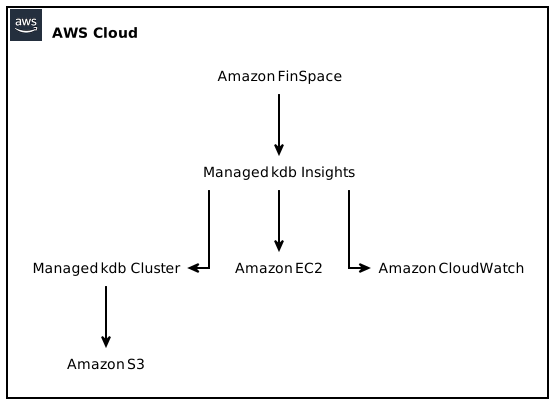
The technical implementation of Dataviews in Amazon FinSpace employs the power of Managed kdb clusters. Managed kdb clusters provide a scalable and reliable infrastructure for data storage and analysis. When utilizing Dataviews, specific configurations are required to ensure smooth data sharing across clusters.
In a nutshell, the technical implementation involves:
4.1 Configuration of Managed kdb Clusters
To enable the sharing of cached data through Dataviews, Managed kdb clusters need to be configured accordingly. This configuration includes specifying the location and size of the high-performance disk where the most recent month’s data will be cached.
4.2 Creating Dataviews
Once the Managed kdb clusters are configured, Dataviews can be created to utilize the shared database caches. Dataviews specify which data should be cached on the high-performance disk for faster access. By leveraging this feature, organizations can prioritize frequently accessed data and optimize performance.
4.3 Synchronization and Data Consistency
To ensure data consistency across different clusters utilizing the shared cache, synchronization mechanisms need to be in place. This ensures that all clusters have access to the most up-to-date information, enabling seamless collaboration and accurate analysis.
5. Increasing Performance with Managed kdb Clusters
Managed kdb clusters play a pivotal role in maximizing performance when utilizing Dataviews. These clusters offer several features designed to increase performance and optimize data access:
5.1 Scalability
Managed kdb clusters provide scalability, allowing organizations to handle increasing volumes of trade execution data seamlessly. As the data grows, clusters can be expanded to cater to the additional workload, ensuring consistent performance and uninterrupted data access.
5.2 Fault Tolerance
In capital markets, uninterrupted access to trade execution data is critical. Managed kdb clusters implement fault-tolerant mechanisms to ensure high availability. In case of failures or disruptions, the system automatically handles failover, minimizing downtime and ensuring continuous, reliable access to cached data.
5.3 Performance Monitoring and Optimization
Monitoring and optimizing cluster performance is crucial for maximizing the benefits of Dataviews. Managed kdb clusters offer comprehensive performance monitoring tools and resources, enabling organizations to understand usage patterns and optimize resource allocation for improved overall performance.
6. Leveraging Shared Data for Different Processes
Dataviews’ ability to share cached data across multiple Managed kdb clusters opens up vast possibilities for leveraging shared data in various processes. Let’s explore some scenarios where shared data can be utilized effectively:
6.1 Real-Time Analytics
Capital markets demand real-time analytics to support quick decision-making. With shared cached data, organizations can perform real-time analytics across different clusters, enabling timely insights into market trends, trade execution patterns, and risk management.
6.2 Regulatory Compliance
Complying with regulatory requirements is a critical aspect of capital markets operations. Shared cached data allows for efficient compliance processes, enabling consistent access to relevant data across clusters. This feature facilitates the identification of compliance issues promptly and ensures proactive measures are taken to mitigate risks.
6.3 Machine Learning and AI Applications
Machine learning and AI applications are gaining significant traction in the financial industry. Shared cached data can be leveraged in machine learning models and AI algorithms, empowering organizations to develop robust predictive models, recommend investment strategies, and automate various trading processes effectively.
7. Enhancing Settlement and Compliance Processes
Dataviews bring tangible benefits to settlement and compliance processes within the capital markets industry. Let’s explore some specific ways in which Dataviews can enhance these critical processes:
7.1 Faster Settlement
Settlement processes often require quick access to trade execution data. By caching the most recent month’s data on high-performance disks accessible by multiple clusters, organizations can reduce settlement time, ensuring prompt and accurate transaction settlements.
7.2 Streamlined Compliance Reporting
Compliance reporting necessitates access to accurate and up-to-date data. Shared cached data allows compliance teams to generate reports seamlessly across different clusters, eliminating the need for data duplication and reducing reporting errors. This streamlining of compliance reporting ensures regulatory requirements are met efficiently.
7.3 Simplified Audit Trails
Maintaining audit trails is crucial for compliance and risk assessment. Shared cached data enables comprehensive audit trails across different clusters, ensuring traceability and accountability. This feature simplifies the auditing process and supports effective risk management within the organization.
8. Historical Data Queries with the Object Store Layer
While the focus of Dataviews is on caching frequently accessed trade execution data, Amazon FinSpace with Managed kdb Insights also provides robust support for historical data analysis. The object store layer within the database facilitates seamless querying of historical data, ensuring accessibility and accuracy for in-depth analysis.
8.1 Retrieving Historical Trade Execution Data
Organizations often require historical trade execution data for in-depth analysis, trend identification, and pattern recognition. The object store layer in Amazon FinSpace provides a reliable and efficient mechanism for retrieving historical data, complementing the performance optimization offered by Dataviews.
8.2 Combining Cached and Historical Data
By leveraging both cached and historical data, organizations can gain a comprehensive understanding of market trends and patterns. The integration of these two data sources enables holistic analysis and supports informed decision-making across different processes within the capital markets industry.
9. Practical Use Cases for Dataviews in Capital Markets
Dataviews have immense potential for practical use cases within the capital markets industry. Let’s explore some examples to understand how organizations can leverage this powerful feature:
9.1 Trade Execution Monitoring
Real-time monitoring of trade execution data is critical for identifying anomalies and ensuring compliance. By utilizing shared cached data, organizations can continuously monitor trade execution across different clusters, facilitating prompt detection of irregularities and enabling timely corrective actions.
9.2 Risk Management and Mitigation
Capital markets are inherently associated with risks. Efficient risk management is crucial to safeguard organizations against potential losses. Shared cached data allows risk management teams to access real-time data across clusters, enabling proactive risk mitigation strategies and effective portfolio risk analysis.
9.3 Performance Reporting and Analysis
Performance reporting and analysis play a pivotal role in evaluating investment strategies and assessing portfolio performance. By utilizing shared cached data, organizations can generate comprehensive performance reports across clusters, allowing comparison and analysis of individual assets, portfolios, and investment strategies.
10. Integrating Dataviews into Existing Infrastructure
Integrating Dataviews into existing infrastructure is a straightforward process that unlocks significant benefits for organizations. To ensure a seamless integration, consider the following tips:
10.1 Assess Existing Data Structures
Before integrating Dataviews, it is essential to assess the existing data structures and understand the data flow within the organization. This assessment helps identify potential areas for optimization and ensures alignment with existing processes.
10.2 Define Caching Requirements
Clearly define the caching requirements for your organization. Identify which data should be prioritized for caching to enhance performance and reduce latency. Collaborate with stakeholders to determine the ideal caching strategy that aligns with your organization’s goals and objectives.
10.3 Plan for Scalability
Consider the scalability aspect while integrating Dataviews. Capital markets often experience fluctuations in data volumes. Plan for future growth and ensure that your infrastructure can handle increasing data demands effectively. Scalability is crucial for maintaining optimal performance and continued success.
11. SEO and Amazon FinSpace: Optimizing for Search Engines
In the realm of SEO (Search Engine Optimization), it is vital to optimize content for search engines to maximize visibility and reach. By incorporating relevant keywords and ensuring technical SEO best practices, your content can attract more readers and gain prominence in search engine results. Below are some tips for optimizing your guide article for SEO:
11.1 Keyword Research
Conduct thorough keyword research to identify relevant terms and phrases that potential readers might use when searching for information related to Amazon FinSpace, Managed kdb, Dataviews, and capital markets. Incorporate these keywords naturally throughout your article to increase its discoverability.
11.2 Structured Heading Tags
Use structured heading tags (e.g., H1, H2, H3) to organize your content and signal hierarchy to search engines. Heading tags not only improve readability for users but also help search engines understand the structure and context of your article.
11.3 Meta Description
Craft a concise and compelling meta description that accurately summarizes the content of your guide article. A well-crafted meta description can entice readers to click through to your article when it appears in search engine results, increasing organic traffic to your guide.
11.4 Internal and External Linking
Incorporate internal and external links strategically throughout your article. Internal linking improves site navigation and connects related content, while external linking to authoritative sources demonstrates expertise and credibility. Both practices contribute to your SEO efforts.
11.5 Image Optimization
Optimize images used in your guide article by providing descriptive alt text and compressing the file size. Additionally, ensure that the images are relevant to the content and properly formatted within the markdown structure.
12. Conclusion
Amazon FinSpace with Managed kdb Insights, coupled with the powerful Dataviews feature, revolutionizes the way capital markets customers access and utilize trade execution data. By enabling the sharing of database caches across Managed kdb clusters, organizations can enhance performance, optimize costs, and streamline settlement and compliance processes.
In this guide, we have explored the benefits of Dataviews, delved into their technical implementation, and discussed their practical applications in capital markets. We have also provided integration tips and highlighted the importance of SEO to maximize the reach and impact of your guide article.
By harnessing the power of Amazon FinSpace with Managed kdb Insights and leveraging Dataviews effectively, organizations can gain a competitive edge in the fast-paced capital markets industry, enabling data-driven decision-making and enhancing overall operational efficiency.