
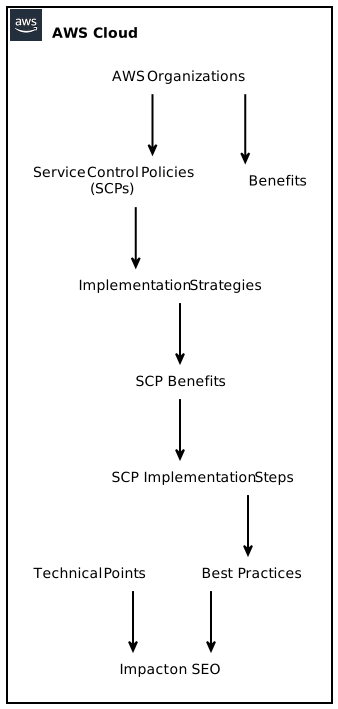
In today’s rapidly evolving technological landscape, it is crucial for businesses to ensure the centralized governance of their environments as they continue to grow and scale their workloads on AWS (Amazon Web Services). With this in mind, AWS has introduced the support for Service Control Policies (SCPs) in AWS China Regions within AWS Organizations. This update empowers central security administrators to establish robust access controls that all IAM (Identity and Access Management) principals, including users and roles, adhere to.
Within this comprehensive guide, we will delve into the intricacies of AWS Organizations with a specific focus on utilizing Service Control Policies (SCPs) in the context of AWS China Regions. We will explore the benefits, implementation strategies, and best practices for deploying SCPs effectively. Moreover, we will analyze the impact of SCPs on search engine optimization (SEO) and provide additional technical, relevant, and interesting points to enhance your understanding and implementation of AWS Organizations.
Table of Contents
- Introduction to AWS Organizations
- What are Service Control Policies (SCPs)?
- Benefits of SCPs in AWS China Regions
- Implementing SCPs for Centralized Access Control
- Best Practices for Effective SCP Deployment
- SCPs and SEO: Maximizing Visibility and Security
- Additional Technical Points on SCPs in AWS China Regions
- Conclusion
1. Introduction to AWS Organizations
Before we delve into the realm of Service Control Policies (SCPs) and their applications within AWS China Regions, let us first gain a clear understanding of AWS Organizations as a concept. AWS Organizations is a service that assists businesses in effectively managing and governing their AWS environments as they continue to grow and scale workloads on the AWS platform. Organizations enables centralized administration and the unified management of multiple AWS accounts, facilitating the implementation of security policies, governance, and compliance across the organization.
2. What are Service Control Policies (SCPs)?
Service Control Policies (SCPs) act as guardrails within AWS Organizations. They enable central security administrators to define fine-grained permissions for all IAM principals (users and roles). SCPs govern access to a range of AWS services and resources within an AWS account or organizational unit. By leveraging SCPs, organizations can exercise granular control over what actions principals can perform on specific resources and services. Furthermore, SCPs contribute to efficient resource allocation and enforcement of security best practices across multiple AWS accounts.
3. Benefits of SCPs in AWS China Regions
The availability of Service Control Policies (SCPs) in AWS China Regions brings forth numerous benefits for businesses operating within this geographical area. Some key advantages of SCPs in AWS China Regions include:
a. Enhanced Security and Compliance
By defining and enforcing strict policies through SCPs, organizations can ensure that only authorized users and roles can access sensitive resources. This significantly reduces the risk of unauthorized access, data breaches, and regulatory non-compliance.
b. Centralized Administration
Utilizing SCPs within AWS Organizations empowers central security administrators with control over resource allocation and permissions across multiple AWS accounts or organizational units. This centralized approach streamlines security configuration and ensures consistent application of access controls.
c. Resource Optimization and Cost Reduction
SCPs facilitate resource optimization by allowing organizations to restrict access to specific services or resources. This ensures that only essential resources for individual accounts or units are provisioned, resulting in cost reductions and improved resource allocation.
d. Scaling Workloads and Improved Agility
SCPs provide a secure framework for scaling workloads on AWS China Regions. Administrators can easily allocate resources and permissions, enabling teams to adopt new technologies and services in a controlled manner, without compromising security or performance.
e. Simplified Compliance Audits
By implementing SCPs, organizations can ensure adherence to standard security frameworks and compliance requirements. This simplifies the process of conducting internal and external audits and provides a comprehensive overview of security configurations within the organization.
4. Implementing SCPs for Centralized Access Control
Implementing Service Control Policies (SCPs) requires a systematic approach to effectively control access across accounts and organizational units within AWS Organizations. The following steps outline the process of deploying SCPs for centralized access control:
Define the desired access level: Before implementing SCPs, it is essential to map out the desired access levels for each entity within the organization. This includes determining the specific services and resources that each account or organizational unit should have access to.
Create a policy framework: Establish a policy framework considering the organization’s security requirements, compliance standards, and business goals. This ensures that all deployed SCPs align with the organization’s overarching governance strategy.
Design SCPs: Leverage AWS Organizations to design SCPs that align with the predefined policy framework. Establish fine-grained permissions that define what IAM principals can access and perform specific actions on within the AWS accounts.
Attach SCPs to organizational units: Associate the designed SCPs with relevant organizational units within AWS Organizations. Assigning SCPs enables the centralized enforcement of access controls, ensuring consistency across accounts and units.
Test and evaluate: Conduct thorough testing of the implemented SCPs to validate their effectiveness in achieving access control objectives. Continuously monitor and evaluate the impact of SCPs, iterating as necessary to refine and enhance their configurations.
5. Best Practices for Effective SCP Deployment
To maximize the effectiveness of Service Control Policies (SCPs) within AWS China Regions, it is essential to follow best practices for deployment. The following recommendations will assist administrators in deploying SCPs effectively:
a. Regularly review and update SCPs
As the organization’s requirements evolve, it is crucial to review and update SCPs accordingly. Regularly evaluating SCP configurations allows for the inclusion of new services, modification of access levels, and removal of unnecessary restrictions.
b. Test SCPs in a controlled environment
Before enforcing SCPs organization-wide, test them in a controlled environment. This ensures that intended access controls are accurately configured and that all desired resources and services are accessible to IAM principals.
c. Utilize SCP inheritance
Leverage the hierarchical nature of AWS Organizations to make efficient use of SCP inheritance. By applying SCPs at the organizational unit level and allowing them to propagate to child accounts, administrators can simplify access control configurations and reduce the administrative burden.
d. Leverage SCPs for separation of duties
Utilize SCPs to enforce separation of duties by limiting administrators to specific actions and resources. This ensures that no single individual has complete control over all organizational resources, enhancing security and reducing the risk of insider threats.
e. Monitor and track SCP violations
Implement robust monitoring and alerting mechanisms to track any violations or attempts to bypass SCPs. Regularly reviewing violation logs and security reports enables prompt response and mitigation of potential security breaches.
6. SCPs and SEO: Maximizing Visibility and Security
Although the primary focus of Service Control Policies (SCPs) is enforcing access control and governance, their proper implementation can indirectly contribute to improved search engine optimization (SEO) practices. Consider the following points to maximize visibility and security simultaneously:
a. Restrict crawling of non-public resources
By leveraging SCPs, administrators can enforce restrictions on public access to sensitive resources, such as development or staging environments. Preventing search engine crawlers from accessing these non-public resources enhances security and mitigates the risk of sensitive information being indexed by search engines.
b. Implement HTTPS encryption
Utilize SCPs to enforce the use of HTTPS encryption throughout the organization’s infrastructure. This not only safeguards sensitive data but also contributes to improved SEO, as search engines give preference to websites that prioritize encryption and security.
c. Categorize and manage permissions consistently
Consistency in managing permissions through SCP deployment helps categorize resources accurately. This, in turn, aids search engines in understanding the structure and organization of the website, leading to improved SEO.
d. Ensure secure handling of user data
Organizations dealing with user-generated data must establish SCPs that enforce strict access controls and data handling practices. Compliance with relevant data protection and privacy standards positively influences both security and SEO.
7. Additional Technical Points on SCPs in AWS China Regions
Beyond the core concepts and implementation strategies, there are several additional technical points that are worth noting about Service Control Policies (SCPs) in AWS China Regions. These points provide further insight into leveraging SCPs effectively within AWS Organizations:
a. SCPs and Resource Constraints
While deploying SCPs, be mindful of the resource constraints that can potentially impact performance or resource availability. For example, overly restrictive SCPs may hinder the provisioning of necessary resources or lead to service interruptions.
b. SCPs and Trust Relationships
Consider trust relationships between accounts and organizational units while designing SCPs. Utilize SCPs to control cross-account access, ensuring that all relevant parties can access the required resources within the predefined scope.
c. SCPs and IAM Role Management
Leveraging IAM roles is fundamental to the effective implementation of SCPs. Employing well-defined roles streamlines the management of SCPs, enabling administrators to grant and restrict access based on specific roles within the organization.
d. SCPs and Compliance Reporting
Implement SCPs that facilitate compliance reporting by effectively logging and monitoring account activities and access attempts. This ensures that auditing requirements are met, streamlining the process of compliance assessment and reporting.
8. Conclusion
AWS Organizations, coupled with the support for Service Control Policies (SCPs) in AWS China Regions, provides businesses with a robust framework for achieving centralized governance, access control, and security in the cloud. In this guide, we explored the fundamental concepts of AWS Organizations and delved into the intricacies of implementing SCPs effectively.
By adhering to best practices, regularly reviewing and updating SCPs, and considering their impact on SEO practices, organizations can maximize visibility, security, and compliance within their AWS environments. Harnessing the power of SCPs empowers businesses to grow and scale workloads on AWS China Regions while maintaining optimal control and governance.
As the technological landscape continues to evolve, it is crucial to stay updated with the latest advancements and best practices within AWS Organizations and Service Control Policies. Embrace the power of centralized governance, robust access control, and secure resource allocation as you navigate the AWS cloud with confidence.