

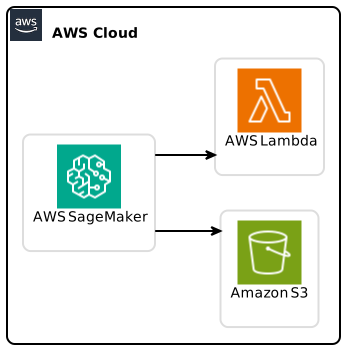
Cloud innovation is rapidly shaping the future of technology, impacting how businesses operate, and significantly enhancing artificial intelligence (AI) and machine learning (ML) training processes. In this comprehensive guide, we’ll explore the latest advancements, key players in the cloud industry, and actionable insights for implementing cloud solutions.
Whether you are new to the concept or an experienced professional, this article will provide you with a wealth of information and best practices, ensuring you are well-equipped to take on cloud innovations in your organization.
Introduction to Cloud Innovation
Cloud innovation refers to the continuous evolution and improvement of cloud computing technologies. From software applications to infrastructure services, advancements in the cloud sector allow organizations to optimize operations, enhance scalability, and reduce costs. With the rapid development of AI and advanced analytics, cloud innovation plays a crucial role in maximizing the potential of these technologies.
In this guide, we will delve into the impact of cloud innovations like AWS SageMaker HyperPod’s managed tiered checkpointing—designed to improve the efficiency of large-scale AI training processes. We will cover topics such as:
- Understanding the Importance of Checkpointing in AI Training
- Implementing Managed Tiered Checkpointing
- Future Trends in Cloud Innovation and AI Development
The focus keyphrase for this article is cloud innovation, and you will find its integration throughout the content to ensure clarity and SEO optimization.
Understanding the Importance of Checkpointing in AI Training
What is Checkpointing?
Checkpointing in machine learning refers to saving the state of a model at certain intervals during training. This process is crucial for several reasons:
- Recovery: In the event of a failure, checkpointing allows researchers to resume training with minimal loss of progress.
- Performance Optimization: Frequent checkpoints ensure that training can continue with minimal interruption, which is essential when working with large datasets and complex models.
Traditional vs. Managed Checkpointing
Traditional checkpointing methods often involve saving large model states to disk, which can be slow and resource-intensive. As models grow in size and complexity, the inefficiencies of traditional methods become more pronounced. Here’s a brief comparison:
| Tradition Checkpointing | Managed Checkpointing |
|——————————|———————————–|
| Slow recovery time | Fast recovery leveraging in-memory storage |
| High storage and compute costs | Minimized costs with in-memory and persistent storage |
| Complex implementation | Simplified with APIs and libraries such as PyTorch’s DCP |
The Challenge of Infrastructure Failures
One of the primary issues in AI training within cloud environments is the potential for infrastructure failures. As the scale of AI training increases, so does the likelihood of interruptions. Efficient checkpointing strategies become vital for organizations relying on cloud services.
Actionable Insights
To reap the benefits of effective checkpointing:
- Assess Your Models: Determine the complexity and size of your models to decide how often you should implement checkpoints.
- Explore Hybrid Solutions: Investigate solutions like AWS SageMaker’s managed tiered checkpointing to strike a balance between storage costs and recovery speed.
- Regular Calibration: Continuously optimize your checkpoint interval based on training speeds and historical data regarding failures.
Implementing Managed Tiered Checkpointing with AWS SageMaker
Amazon Web Services (AWS) has rolled out managed tiered checkpointing, a feature that mitigates the above issues and empowers developers with a more effective training process.
Key Features of Managed Tiered Checkpointing
- Rapid Recovery: With the ability to store frequent checkpoints in CPU memory, recovery times are drastically reduced.
- Cost Efficiency: By periodically saving data to Amazon S3, organizations can lower their storage costs while ensuring durability.
- Easy Integration: Users of PyTorch can implement checkpointing with minimal disruption to their existing training scripts.
Enabling Managed Tiered Checkpointing
To enable managed tiered checkpointing in AWS SageMaker HyperPod, users follow these steps:
- Cluster Creation: Specify parameters in the CreateCluster or UpdateCluster API to configure managed checkpointing.
- Code Implementation: Utilize the sagemaker-checkpointing Python library, which provides easy access to the managed tiered checkpointing functionality.
- Configure Checkpoint Policies: Define your checkpoint frequency and retention policies per your organizational needs.
Example Code Snippet
Here’s an example of how simple it is to implement managed tiered checkpointing in your training workflow:
python
import sagemaker
from sagemaker.huggingface import HuggingFace
Create a Hugging Face estimator
huggingface_estimator = HuggingFace(
entry_point=’train.py’,
role=’SageMakerRole’,
transformers_version=’4.3.0′,
pytorch_version=’1.6.0′,
py_version=’py36′,
instance_count=1,
instance_type=’ml.p3.2xlarge’,
checkpointing_options={
“mode”: “managed”,
“frequency”: “10”,
“retention_policy”: “60” # retain checkpoints for 60 minutes
}
)
Start training
huggingface_estimator.fit(‘s3://your-bucket/path-to-training-data/’)
Actionable Insights
- Documentation Review: Familiarize yourself with AWS documentation for complete guidance on effective usage.
- Experiment with Parameters: Adjust checkpointing frequency and retention policies based on project needs.
Future Trends in Cloud Innovation and AI Development
As cloud innovation continues to evolve, we can anticipate several key trends that will shape the landscape:
1. Greater Adoption of AI in Cloud Services
More organizations will integrate AI-driven tools to enhance cloud services, automating routine tasks and improving efficiency.
2. Serverless Architectures
The adoption of serverless computing allows for dynamic resource scaling, enabling businesses to pay only for what they use, leading to cost savings.
3. Enhanced Data Analytics
Improved analytical tools will be included in cloud services, enabling companies to derive insights from vast amounts of data with ease.
4. Sustainability Efforts
As concerns for environmental impact grow, cloud providers will likely focus on sustainable technologies and practices, aiming for carbon neutrality.
5. Increased Security Measures
With data breaches becoming more prevalent, cloud services will invest heavily in security protocols to protect user data.
Actionable Insights
- Stay Informed: Regularly track cloud innovation news to stay ahead of trends and updates.
- Leverage AI Tools: Explore new AI-driven functionalities within your cloud services for enhanced performance.
Conclusion and Key Takeaways
In conclusion, cloud innovation, especially around managed tiered checkpointing for AI training, is critical for organizations seeking to improve operational efficiency and reduce resource waste.
Key Takeaways:
- Implementing effective checkpointing strategies is essential for minimizing recovery time and maximizing training efficiency.
- AWS SageMaker’s managed tiered checkpointing is a solid solution for organizations looking to enhance their AI training processes.
- Future trends in cloud innovation will inevitably shape the landscape, making it vital for businesses to remain adaptable and informed.
By understanding and utilizing the concepts discussed in this guide, you can ensure that your organization remains competitive in the ever-evolving landscape of cloud innovation.
For more detailed guidance on cloud solutions and their implementation, consider exploring additional resources and tools available in the industry.
Stay updated with our latest insights and developments in the field of cloud innovation!