

Introduction
The cloud innovation landscape is constantly evolving, driven by advancements in technology and changing business needs. In this comprehensive guide, we aim to explore significant cloud innovations and the latest news in 2025, shedding light on some of the most transformative developments in the industry. As we delve into topics such as serverless computing, continuous integration and deployment (CI/CD), and automated workflows, we’ll provide actionable insights and solutions that can help businesses leverage these innovations for their own advantage.
As we navigate through this article, you can expect a blend of technical depth, practical advice, and a user-friendly tone designed for both novice and experienced professionals in the field.
Table of Contents
- Understanding Cloud Innovations
- AWS Lambda and GitHub Actions Integration
- Benefits of Serverless Computing
- Building CI/CD Workflows
- Best Practices for Lambda Deployments
- What’s Next in Cloud Innovations?
- Conclusion: Key Takeaways
Understanding Cloud Innovations
Cloud innovations encompass a range of technologies that enhance service delivery and operational efficiency. New tools, protocols, and frameworks emerge continuously to optimize how businesses store, process, and analyze data.
Key Components of Cloud Innovations
- Scalability: Modern solutions allow businesses to scale resources seamlessly based on demand.
- Reduced Costs: Innovations focus on minimizing overhead through efficient resource allocation.
- Accessibility: Enhanced access to cloud services makes it easier for teams to collaborate remotely.
- Automation: Automated processes reduce routine tasks, freeing up teams for more strategic work.
For a deeper dive into scalability and other important factors, check our detailed articles on scalability in cloud computing and cost reduction strategies.
AWS Lambda and GitHub Actions Integration
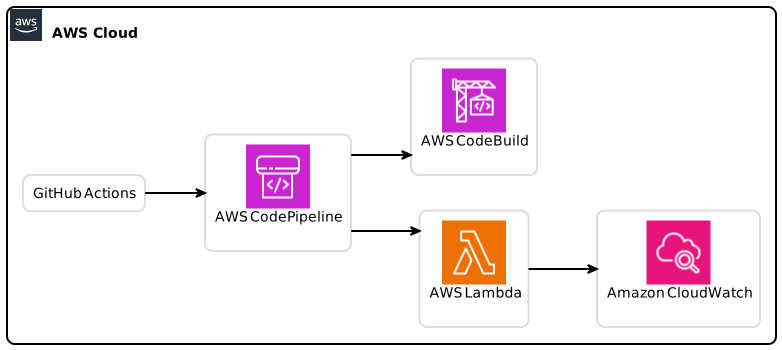
In 2025, AWS Lambda introduced a powerful feature allowing developers to utilize GitHub Actions for deploying Lambda functions automatically. This innovation significantly streamlines CI/CD workflows, allowing teams to push code or configuration changes directly from their GitHub repositories into AWS Lambda.
The Benefits of This Integration
- Simplified Deployment: Automates the entire deployment process, minimizing the need for custom scripts or manual commands.
- Error Reduction: Reduces the likelihood of deployment errors stemming from manual configurations.
- Enhanced Developer Experience: Lowering the onboarding time for new developers by reducing the complexity of deployment scripts.
How to Get Started with GitHub Actions for Lambda
To implement GitHub Actions for AWS Lambda, follow these steps:
- Create a GitHub Repository: Start with a repository where your Lambda code will reside.
- Add the Deploy Lambda Action: Insert the deployment action in your GitHub Actions workflow file.
- Configure Your Function Parameters: Set parameters like runtime, memory size, and timeout within the action.
Example YAML Configuration
Here’s a simple YAML example to get you started with the action:
yaml
name: Deploy Lambda Functionon:
push:
branches:
– mainjobs:
deploy:
runs-on: ubuntu-latest
steps:
– name: Checkout code
uses: actions/checkout@v2
– name: Deploy to AWS Lambda
uses: aws-actions/aws-lambda-deploy@v1
with:
function_name: YourLambdaFunctionName
s3_bucket: YourS3BucketName
s3_key: YourS3Key
For further details, refer to the AWS Lambda developer guide.
Benefits of Serverless Computing
The shift towards serverless computing represents another major trend in cloud innovation. Here, we will explore what makes serverless architectures advantageous and why businesses should consider adopting them.
Key Advantages of Serverless Computing
- Cost Efficiency: Pay only for what you use rather than maintaining idle servers, leading to significant cost savings.
- Automatic Scaling: Serverless solutions automatically adjust to traffic fluctuations without manual intervention.
- Reduced Operational Management: Less focus on server maintenance means teams can concentrate on developing applications.
Use Cases and Applications of Serverless Computing
- Web Application Backends: Easily create scalable APIs without server management.
- Data Processing Pipelines: Run data transformation jobs in response to events.
- IoT backends: Process and analyze data from IoT devices without provisioning servers.
For a full exploration of serverless architectures, you might find our article on serverless computing to be helpful.
Building CI/CD Workflows
The combination of AWS Lambda and GitHub Actions provides a robust platform for implementing CI/CD workflows for serverless applications, allowing seamless integration between code repositories and deployment environments.
Key Components of CI/CD for Serverless
- Version Control: Store code in repositories and track changes efficiently.
- Automation: Leverage GitHub Actions to trigger builds and deployments automatically.
- Monitoring and Testing: Implement tests and monitoring to ensure code quality before production deployments.
Important Tools for CI/CD in Cloud Innovation
- AWS CodePipeline: Automates build and deployment phases.
- CircleCI: Offers powerful CI/CD capabilities that can integrate with AWS Lambda.
- Travis CI: A CI service that supports multiple cloud-based deployment options.
For in-depth details, check out our comprehensive guide on CI/CD best practices.
Best Practices for Lambda Deployments
Implementing effective best practices can improve your deployment process significantly when using AWS Lambda with GitHub Actions. Here are some structured recommendations:
Essential Best Practices
- Use Version Control: Ensure all Lambda code is kept in version control to track changes accurately.
- Define IAM Roles Carefully: Set up IAM permissions to follow the principle of least privilege.
- Testing Before Deployment: Use automated testing tools to verify that your code works as expected before deployment.
Monitoring and Performance Optimization
- Use AWS CloudWatch: Monitor your applications and set alarms for any performance issues.
- Optimize Function Size: Keep function packages lightweight for quicker deployments and responsiveness.
- Implement a Rollback Mechanism: Set up systems for quick rollbacks in case of deployment failures.
For additional guidance, refer to our detailed section on best practices in serverless architecture.
What’s Next in Cloud Innovations?
Looking forward, several trends and predictions are shaping the future of cloud innovations and serverless computing:
- Increased Focus on Security: As cloud adoption grows, securing applications and data in the cloud will become paramount.
- Expansion of AI in Cloud Services: Integration of AI and Machine Learning tools into cloud services to enhance automation and analytical capabilities.
- Rise of Multi-Cloud Strategies: Businesses are increasingly opting for multi-cloud strategies to maximize benefits across different cloud providers.
These insights signal a future where cloud services are not just a means of storage but integral components of strategic business operations.
Conclusion: Key Takeaways
In summary, this guide has provided a comprehensive overview of cloud innovations and news in 2025, with a strong emphasis on AWS Lambda and GitHub Actions integration as a game changer in CI/CD workflows. As cloud technologies evolve, businesses can benefit from leveraging these developments to enhance their operational efficiency and reduce costs.
Key Takeaways
- Embrace serverless computing to benefit from cost efficiency and automatic scaling.
- Leverage GitHub Actions for simplified deployment processes in AWS Lambda.
- Monitor and optimize Lambda functions to ensure high performance.
As we move into an era where cloud innovations become central to business strategies, staying informed will empower organizations to adapt and thrive.
Find out more about how cloud innovation is evolving by staying updated with our latest articles and resources on cloud technology.
The focus keyphrase Cloud Innovation has been effectively woven throughout the guide.