

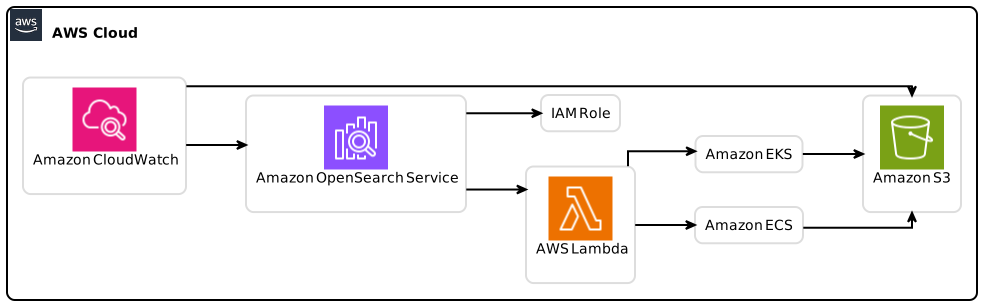
Cloud innovation continues to reshape industries and transform business operations, making it imperative for organizations to stay informed on the latest cloud trends and news. This guide covers essential insights, updates, and strategies in the realm of cloud computing that can help you leverage these innovations for your business.
Table of Contents
- Introduction to Cloud Innovation
- Understanding Key Trends in Cloud Technology
- Amazon OpenSearch Service: FGAC Overview
- Benefits of Fine Grained Access Control for OpenSearch
- Implementing FGAC in Amazon OpenSearch Service
- Best Practices for Data Governance in Cloud Environments
- Future Trends and Predictions in Cloud Computing
- Conclusion: Your Next Steps in Cloud Innovation
Introduction to Cloud Innovation
Cloud innovation encompasses the continuous evolution of technologies, processes, and services in cloud computing. It aims to enhance efficiency, improve security, and streamline operations for businesses of all sizes. Staying up-to-date with cloud innovation and news is essential as it equips organizations with the knowledge needed to adapt to rapid changes in the tech landscape, allowing them to leverage the cloud for competitive advantage.
Understanding Key Trends in Cloud Technology
Cloud computing is a dynamic field with various trends shaping its future. Being aware of these trends will enable you to make informed decisions regarding your cloud strategy.
The Rise of Serverless Computing
Serverless computing allows developers to build and run applications without managing infrastructure explicitly. This approach significantly lowers the operational burden on IT teams and promotes rapid development.
Key Benefits of Serverless Computing:
- Cost Efficiency: Pay only for the resources consumed, avoiding idle server costs.
- Scalability: Automatically scales up or down based on demand.
- Faster Time-to-Market: Prioritize development and deployment without worrying about server management.
Multi-Cloud Strategies and Their Benefits
Multi-cloud strategy involves using multiple cloud services from different providers to optimize performance and avoid vendor lock-in. This approach offers flexibility and more control over the cloud environment.
Advantages of Multi-Cloud Strategies:
- Redundancy: Minimize the risk of downtime by distributing services across multiple providers.
- Optimization: Select the best services for specific workloads based on performance and cost.
- Compliance and Governance: Maintain data sovereignty and adhere to varying regulatory requirements across regions.
Containerization and Microservices Architecture
Containerization allows developers to package applications and their dependencies in containers, ensuring consistent performance across environments. Paired with microservices architecture, this trend facilitates the creation of resilient and scalable applications.
Benefits of Containerization:
- Portability: Run applications seamlessly across different cloud environments.
- Isolation: Prevent dependency conflicts and security vulnerabilities.
- Faster Deployment: Accelerate CI/CD (Continuous Integration/Continuous Deployment) processes.
Amazon OpenSearch Service: FGAC Overview
One of the significant innovations in cloud technology is Amazon OpenSearch Service’s support for Fine Grained Access Control (FGAC). This feature enhances security and simplifies user management in multi-tenant environments.
What is Fine Grained Access Control (FGAC)?
FGAC allows organizations to define precise data access control based on user attributes during SAML (Security Assertion Markup Language) authentication and authorization. This capability caters to the evolving requirements of data governance, especially in regulated industries.
Key Features of FGAC:
- Dynamic Role Mapping: Configure attribute mappings from IdP (Identity Provider) user roles and attributes to OpenSearch backend roles.
- Scoped Access: Define index-level permissions and document-level security to control data access.
- Reduced Administrative Friction: Auto-apply data source permissions based on user assertions, minimizing manual management tasks.
SAML Integration for Enhanced Security
SAML via IAM (Identity and Access Management) federated is a widely adopted method for enabling single sign-on (SSO) experiences. Integrating FGAC with SAML improves security and user experience by connecting user attributes directly to OpenSearch.
Benefits of SAML Integration:
- Convenience: Users can access OpenSearch UI seamlessly across applications.
- Improved Security: Centralized user management enhances visibility and audit capabilities.
- Scalable Solutions: Streamline onboarding and offboarding processes for employees.
Benefits of Fine Grained Access Control for OpenSearch
Implementing FGAC within Amazon OpenSearch Service offers numerous advantages for businesses looking to advance their data governance frameworks.
Key Benefits
- Precision in Data Access: Organizations can grant specific access rights to users based on their roles and responsibilities.
- Audit Trails: Actions taken by users are tied to SAML attributes, providing clarity in user actions and making governance easier.
- User Management Optimization: Manage users and groups using existing IdP solutions, which simplifies access management processes.
Implementing FGAC in Amazon OpenSearch Service
Setting up Fine Grained Access Control in Amazon OpenSearch Service involves several actionable steps.
Step-by-Step Guide
- Set Up Your Identity Provider (IdP):
Deploy an IdP that supports SAML (e.g., Okta, Microsoft AD).
Configure SAML Settings in OpenSearch:
- Access the OpenSearch UI and navigate to the security settings.
Set up SAML as your authentication method and provide IdP metadata.
Define Attribute Mappings:
Map user roles and attributes from the IdP to OpenSearch backend roles.
Set Index-Level Permissions:
Specify which indices users can access based on their assigned roles.
Test the Implementation:
Validate access control by logging in with different user roles to ensure permissions are correctly enforced.
Monitor Activity Logs:
- Regularly check audit logs to ensure compliance and track access control changes.
Best Practices for Data Governance in Cloud Environments
Effective data governance ensures that your organization meets compliance requirements and maintains data integrity in cloud environments.
Recommended Practices
- Establish Clear Policies: Create comprehensive data governance policies that outline data access, usage, and management protocols.
- Regular Audits: Conduct periodic audits to evaluate compliance with set policies and adjust as necessary.
- Implementation of Role-Based Access Control (RBAC): Use RBAC to limit user access based on their roles within the organization.
- User Training: Offer training programs on data governance essentials for employees to foster awareness and responsibility regarding data handling.
- Leverage Automation Tools: Utilize automation to manage permissions and monitor user activities effectively.
Future Trends and Predictions in Cloud Computing
As technology continuously evolves, certain trends are poised to become more prevalent in the cloud space:
- AI and Machine Learning Integration: Cloud platforms will increasingly integrate AI capabilities, allowing for smarter automation and data processing.
- Edge Computing Adoption: The rise of IoT devices will drive demand for edge computing solutions that enable real-time data processing closer to the source.
- Increased Focus on Security: As cyber threats evolve, security will become a critical priority, with innovations like FGAC leading the charge.
- Sustainability Initiatives: Organizations will emphasize sustainability with eco-friendly cloud solutions aimed at reducing environmental impact.
Conclusion: Your Next Steps in Cloud Innovation
In the fast-paced world of cloud computing, understanding and leveraging the latest innovations is key to staying competitive. Utilizing features like Fine Grained Access Control within Amazon OpenSearch Service enhances your organization’s data governance while addressing security concerns effectively.
By embracing cloud innovation and keeping abreast of industry developments, you are well-positioned to harness the full potential of cloud technology.
Start implementing these strategies in your business today to secure your future in an increasingly digital landscape.
Cloud Innovation & News.