
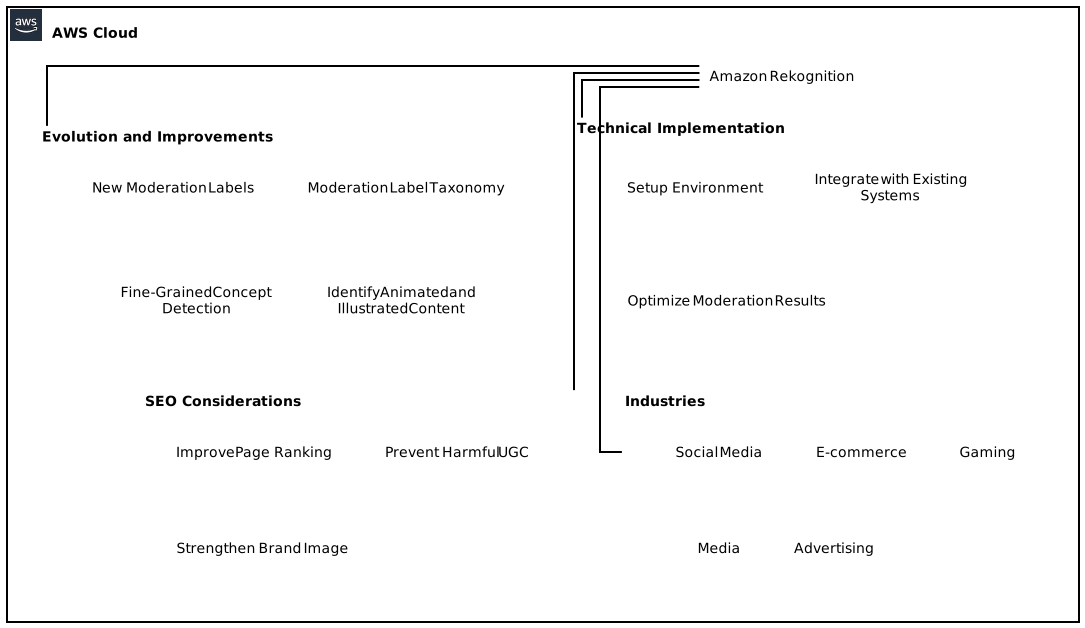
Amazon Rekognition is a powerful tool that allows customers in various industries to effectively moderate the content they display to their users. By utilizing this service, businesses can protect their brand reputation and foster safe user communities. In this guide, we will explore the recent improvements made to Amazon Rekognition’s content moderation capabilities, focusing on the addition of new moderation labels, the expansion of the moderation label taxonomy, and the improved accuracy that accompanies these updates.
Throughout this article, we will delve into the technical aspects of Amazon Rekognition, provide insights into its SEO implications, and highlight additional relevant and interesting points that will help you harness the full potential of this service.
Table of Contents
- Introduction
- Content Moderation and its Significance
- Understanding Amazon Rekognition
- The Importance of SEO in Content Moderation
- The Evolution of Amazon Rekognition Content Moderation
- New Moderation Labels
- Three-Tier Label Category
- Fine-Grained Concept Detection
- Animated and Illustrated Content
- Enhancing Content Moderation Workflow
- Creating Granular Rules
- Higher Accuracy through Updated Model
- Technical Implementation of Amazon Rekognition Content Moderation
- Setting Up the Environment
- Integrating Amazon Rekognition into Existing Systems
- Best Practices for Optimizing Moderation Results
- SEO Considerations for Content Moderation with Amazon Rekognition
- Improving Page Ranking with Safe Content
- Preventing Harmful User-Generated Content (UGC)
- Strengthening Brand Image through Clean Content
- Leveraging Amazon Rekognition Content Moderation in Different Industries
- Social Media
- E-commerce
- Gaming
- Media
- Advertising
- Conclusion
2. Content Moderation and its Significance
Content moderation involves the process of reviewing and filtering user-generated content (UGC) to ensure that it aligns with a platform’s content policy. With the rise of social media, e-commerce, gaming, media, and advertising platforms, the need for effective content moderation has become more imperative than ever before. Customers demand a safe and respectful environment that preserves their trust and safeguards against harmful or inappropriate content.
Additionally, maintaining a brand’s reputation is crucial. With social media platforms, in particular, any negative association due to the presence of offensive content can quickly escalate and lead to significant reputational damage. Thus, content moderation serves as a vital mechanism for businesses to protect their interests and create a safe space for their user communities.
3. Understanding Amazon Rekognition
Amazon Rekognition is a comprehensive computer vision service that enables the analysis of images and videos to extract valuable insights. Through deep learning models, it provides precise object and scene detection, facial analysis, text recognition, and more. This vast array of features empowers businesses to gain a deeper understanding of visual content and integrate it into their applications and services.
One of the most significant applications of Amazon Rekognition is content moderation. Leveraging its robust capabilities, businesses can automatically identify and filter inappropriate, offensive, or harmful content, ensuring safe user experiences. The service operates at scale, allowing for efficient processing of large volumes of content in real-time.
4. The Importance of SEO in Content Moderation
Content moderation and SEO are intricately linked. Search engines, such as Google, favor platforms that provide safe user experiences by ensuring that content adheres to guidelines and is free from offensive or harmful material. Websites or applications that actively moderate content are more likely to rank higher in search results.
By utilizing Amazon Rekognition’s content moderation capabilities, businesses can improve their SEO efforts. They can confidently promote their platforms as secure environments that prioritize user safety while also reaping the benefits of higher search engine rankings.
Next, we will explore the recent improvements made to Amazon Rekognition’s content moderation capabilities and how they contribute to a more effective and accurate moderation workflow.
5. The Evolution of Amazon Rekognition Content Moderation
5.1 New Moderation Labels
Amazon Rekognition recently introduced 26 new moderation labels, significantly expanding its ability to identify and categorize various types of content. These labels encompass a wide range of potentially objectionable content, such as violence, nudity, drugs, explicit language, and more.
The addition of these new labels allows businesses to establish more precise rules for their content moderation workflows. By detecting and filtering specific types of content, platforms can ensure that their users are not exposed to inappropriate material, thereby enhancing their overall user experience.
5.2 Three-Tier Label Category
The moderation label taxonomy in Amazon Rekognition has evolved from a two-tier to a three-tier label category. This expansion provides customers with a more granular and nuanced view of their content. The three-tier taxonomy consists of a hierarchy with root labels, sub-labels, and further sub-labels.
This enhancement enables businesses to gain a deeper understanding of the nature of objectionable content present on their platforms. They can implement targeted moderation strategies by leveraging this hierarchical taxonomy and focus on specific content categories when formulating content policies.
5.3 Fine-Grained Concept Detection
The improved model of Amazon Rekognition content moderation allows for more fine-grained concept detection. The service can now identify specific visual elements within an image or video, providing businesses with a comprehensive understanding of the content they want to moderate.
For instance, rather than broadly identifying violence in an image, the upgraded model can pinpoint weapons, blood, or aggressive behavior. This level of granularity enables businesses to more accurately moderate content and avoid false positives or negatives.
5.4 Animated and Illustrated Content
With the recent update, Amazon Rekognition now has the capability to identify animated and illustrated content, in addition to traditional images and videos. This enhancement is particularly valuable for businesses operating in the gaming and media industries.
Animated and illustrated content often comes with its own set of challenges when it comes to moderation. Platforms can now effectively filter and moderate these unique types of content according to their specific requirements. Businesses can establish rules to either include or exclude animated and illustrated content, tailoring their moderation workflow to their target audience.
6. Enhancing Content Moderation Workflow
6.1 Creating Granular Rules
The expanded moderation label taxonomy and the addition of new moderation labels provide businesses with the ability to create granular rules for their content moderation workflows. By leveraging this capability, platforms can precisely identify the type of content they want to filter and handle it accordingly.
For instance, in an e-commerce platform, businesses can create rules to ensure that products containing explicit language or adult content are not displayed to their users. With these granular rules, businesses can align their content moderation with their brand values and content policies.
6.2 Higher Accuracy through Updated Model
The updated model in Amazon Rekognition results in higher accuracy in content moderation. By training the model on an expanded dataset and incorporating advanced algorithms, Amazon has improved the service’s ability to detect and moderate objectionable content reliably.
This increase in accuracy is crucial for businesses as it minimizes the risk of allowing inappropriate or harmful content to slip through the moderation process. The improved model ensures that platforms can maintain a safe environment for users, protecting their brand reputation and fostering trust.
Next, we will delve into the technical implementation of Amazon Rekognition content moderation, providing insights into setting up the environment, integrating the service into existing systems, and best practices for optimizing moderation results.
7. Technical Implementation of Amazon Rekognition Content Moderation
7.1 Setting Up the Environment
To get started with Amazon Rekognition content moderation, businesses need to set up their environment. This involves creating an AWS account and navigating to the Amazon Rekognition service. From there, they can activate the content moderation feature and configure the necessary permissions and settings.
AWS provides thorough documentation and tutorials to guide businesses through the setup process. Following these guidelines ensures a smooth and streamlined deployment of Amazon Rekognition content moderation into existing systems.
7.2 Integrating Amazon Rekognition into Existing Systems
Amazon Rekognition offers multiple integration options to suit different business requirements. Businesses can choose between using the AWS Management Console, the AWS Command Line Interface (CLI), or the AWS SDKs. These integration options allow for seamless incorporation of content moderation into existing workflow and infrastructure.
By leveraging the appropriate integration method, businesses can maximize the potential of Amazon Rekognition content moderation within their specific ecosystem. They can ensure that the service aligns with their current processes and contributes to a smoother moderation workflow.
7.3 Best Practices for Optimizing Moderation Results
To achieve the best possible results in content moderation, businesses should follow a set of best practices. These practices enhance the accuracy and efficiency of Amazon Rekognition’s content moderation capabilities.
One crucial aspect is providing the service with high-quality input data. Clear and well-lit images or videos contribute to more accurate moderation results. Additionally, businesses should consider fine-tuning the moderation rules based on their unique content and user community.
Another key best practice is regularly monitoring and updating the moderation rules. Content trends and user preferences continually evolve, and platforms must adapt their moderation workflows accordingly. By staying proactive, businesses can maintain a cutting-edge content moderation system that effectively caters to their specific needs.
In the next section, we will explore the SEO considerations when incorporating Amazon Rekognition content moderation into a platform. These considerations focus on improving page ranking, preventing harmful user-generated content, and strengthening brand image.
8. SEO Considerations for Content Moderation with Amazon Rekognition
8.1 Improving Page Ranking with Safe Content
Search engines prioritize platforms that ensure safe user experiences. By actively moderating content using Amazon Rekognition, businesses can demonstrate to search engines that they are committed to providing a secure environment. This commitment, in turn, improves the platform’s chances of achieving higher page rankings in search results.
Ensuring that content adheres to search engine guidelines and filtering out offensive or harmful material helps platforms avoid penalties and maintain a favorable reputation with search engines.
8.2 Preventing Harmful User-Generated Content (UGC)
User-generated content (UGC) is a cornerstone of many platforms, but it can also pose risks if not properly moderated. Amazon Rekognition’s content moderation capabilities enable businesses to prevent harmful UGC from appearing on their platforms.
By filtering out inappropriate or offensive UGC, platforms can create a safer space for their users and prevent reputational damage. This proactive approach not only safeguards users from potentially harmful content but also reassures search engines that the platform remains secure.
8.3 Strengthening Brand Image through Clean Content
Brand image is paramount in today’s digital landscape. Offensive or inappropriate content can quickly tarnish a brand’s reputation and erode trust among customers. By utilizing Amazon Rekognition’s content moderation capabilities, businesses can maintain a clean content environment, aligning their brand with a positive and respectful image.
Search engines, customers, and partners all value brands that prioritize user safety and actively moderate content. By investing in content moderation, businesses can position themselves as industry leaders committed to providing a secure user experience.
Next, we will explore how different industries can leverage Amazon Rekognition content moderation to enhance their platforms and protect their users.
9. Leveraging Amazon Rekognition Content Moderation in Different Industries
The versatility of Amazon Rekognition content moderation allows it to be effectively harnessed across various industries. Let’s examine how different sectors can utilize this powerful service.
9.1 Social Media
Social media platforms thrive on user-generated content and rely heavily on effective content moderation. By incorporating Amazon Rekognition, these platforms can automate the moderation process, saving valuable time and resources. The service’s ability to identify and categorize a wide range of objectionable content ensures that users are protected from offensive or harmful material.
9.2 E-commerce
E-commerce platforms often face the challenge of moderating product listings, ensuring that explicit language or adult content is not displayed to users. With Amazon Rekognition content moderation, businesses can confidently filter out inappropriate or offensive product images, providing safer browsing experiences for their customers.
9.3 Gaming
The gaming industry frequently deals with animated and illustrated content that requires specialized moderation. Amazon Rekognition’s capability to identify these unique types of content allows gaming platforms to create tailored rules and effectively moderate their games’ user-generated content.
9.4 Media
Media platforms, including video sharing websites, need to maintain strict content moderation to adhere to content policies and prevent the dissemination of offensive or harmful material. Amazon Rekognition offers the necessary tools to identify and filter objectionable content, ensuring user safety and platform compliance.
9.5 Advertising
Advertising platforms must maintain high standards of content quality to protect both the brands they represent and the users viewing the ads. By implementing Amazon Rekognition content moderation, these platforms can guarantee that advertisements align with content policies and do not contain any objectionable material.
10. Conclusion
Amazon Rekognition’s recent improvements to its content moderation capabilities have made it an invaluable tool for businesses in various industries. The addition of new moderation labels, the expansion of the moderation label taxonomy, and the enhanced accuracy of content moderation enable businesses to protect their brand reputation and foster safe user communities.
By leveraging Amazon Rekognition, businesses can enhance their SEO efforts by providing safe user experiences that align with search engine guidelines. Furthermore, they can maintain a clean content environment, protecting users from harmful or offensive content and cultivating a positive brand image.
Whether it is social media, e-commerce, gaming, media, or advertising, Amazon Rekognition content moderation can be effectively implemented across diverse industries. Its versatility and advanced features provide businesses with the necessary tools to create secure environments and build trusting relationships with their users.
In conclusion, Amazon Rekognition content moderation offers the expertise and technology needed to maintain a safe and respectful online experience for users, while also safeguarding brand reputation and driving business success.