
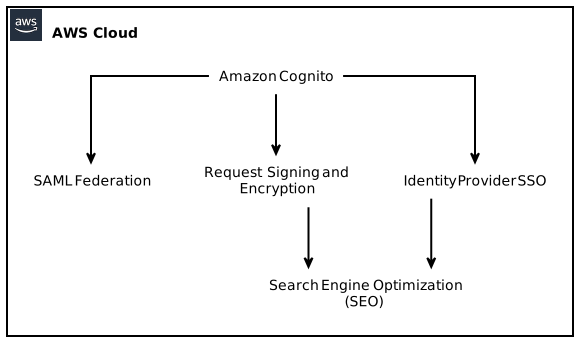
Amazon Cognito, a popular user management and authentication service provided by Amazon Web Services (AWS), has recently introduced new features to enhance its functionality. These new features include signing, encryption, and Identity Provider-initiated Single Sign-On (SSO) for SAML federation. By implementing these features, Amazon Cognito aims to provide an additional layer of security and improved user experience.
This guide article will delve into the details of these new features, exploring how they work and how they can be configured in an Amazon Cognito user pool. We will also discuss the benefits of using request signing and encryption, as well as the advantages of enabling Identity Provider-initiated SSO. Additionally, we will touch upon relevant technical points related to these features and discuss their impact on Search Engine Optimization (SEO).
Table of Contents
- Overview of Amazon Cognito
- The Importance of Security in User Authentication
- Understanding SAML Federation
- Introduction to Request Signing and Encryption in Amazon Cognito
- Configuring Request Signing and Encryption in Amazon Cognito
- Exploring Identity Provider-initiated SSO
- Configuring Identity Provider-initiated SSO in Amazon Cognito
- SEO Benefits of Using Request Signing and Encryption
- SEO Impact of Implementing Identity Provider-initiated SSO
- Best Practices for Leveraging Amazon Cognito Features
- Conclusion
1. Overview of Amazon Cognito
Amazon Cognito is a fully-managed user identity management service provided by AWS. It enables developers to add user registration, login, and user data synchronization to their applications with ease. It eliminates the need for developers to build, scale, and maintain their own backend infrastructure for user management.
Amazon Cognito offers developers several essential features, such as user authentication, authorization, and user management functionalities. It provides options for users to sign up, sign in, and sign out of applications effortlessly. Additionally, it allows developers to customize the sign-up and sign-in processes, tailoring them to their specific needs.
2. The Importance of Security in User Authentication
In today’s digital era, security is of utmost importance when it comes to user authentication. As users share their personal information and credentials with various online platforms, it is vital for service providers to ensure the confidentiality and integrity of this sensitive data.
Amazon Cognito acknowledges the significance of security and has taken steps to enhance the communication between user pools and third-party SAML identity providers. The introduction of request signing and encryption provides an additional layer of protection, safeguarding the data exchanged during the authentication process. By encrypting and signing requests, Amazon Cognito ensures that unauthorized parties cannot tamper with the data or intercept sensitive information.
3. Understanding SAML Federation
Security Assertion Markup Language (SAML) federation is a standard protocol used for exchanging authentication and authorization data between an identity provider (IDP) and a service provider (SP). SAML enables users to access multiple applications using a single set of credentials, eliminating the need for separate usernames and passwords for each app.
When implementing SAML federation, the IDP acts as the trusted provider responsible for authenticating the user, while the SP consumes the SAML assertions provided by the IDP to grant access to resources. This federation model simplifies the authentication process by centralizing user management and reducing the burden of managing multiple credentials.
4. Introduction to Request Signing and Encryption in Amazon Cognito
Request signing and encryption in Amazon Cognito add an additional layer of security to the communication between Amazon Cognito and third-party SAML identity providers. By signing a request, Amazon Cognito generates a digital signature that verifies the integrity of the communication. Likewise, encryption ensures that the data exchanged between the identity provider and Amazon Cognito remains confidential and cannot be deciphered by unauthorized entities.
The use of request signing and encryption guarantees that the SAML assertions exchanged during the authentication process are secure and tamper-proof. This prevents potential attackers from modifying or intercepting the requests to gain unauthorized access.
5. Configuring Request Signing and Encryption in Amazon Cognito
Enabling request signing and encryption in Amazon Cognito is a straightforward process that requires some configuration within the user pool settings. By following these steps, developers can enhance the security of their Amazon Cognito implementation:
- Access the AWS Management Console and navigate to the Amazon Cognito service.
- Select the desired user pool and navigate to the “Federation” settings.
- Locate the SAML identity provider configuration and enable the “Request Signing” option.
- Choose the appropriate signing algorithm and provide the necessary keys or certificates.
- Enable the “Request Encryption” option and configure the encryption algorithm and keys.
- Save the changes and test the configuration to ensure successful integration with the SAML identity provider.
6. Exploring Identity Provider-initiated SSO
Identity Provider-initiated Single Sign-On (SSO) is a feature that enables users to access applications without having to go through a separate login flow. With this feature enabled, users who are already signed in with a SAML identity provider can seamlessly access applications integrated with Amazon Cognito user pools.
Identity Provider-initiated SSO reduces the friction for users, eliminating the need to log in multiple times to access different applications. This improves the user experience and streamlines the authentication process, leading to higher user satisfaction and engagement.
7. Configuring Identity Provider-initiated SSO in Amazon Cognito
To configure Identity Provider-initiated SSO in Amazon Cognito, developers need to follow these steps:
- Access the Amazon Cognito user pool settings and navigate to the “Federation” section.
- Enable the “Identity Provider-initiated SSO” option.
- Configure the necessary callback URLs and endpoints for handling the SAML assertions.
- Save the changes and test the integration with the SAML identity provider.
This configuration allows Amazon Cognito to accept SAML assertions from users already signed in with a SAML identity provider, granting them seamless access to applications without the need for additional login flows.
8. SEO Benefits of Using Request Signing and Encryption
From an SEO standpoint, implementing request signing and encryption in Amazon Cognito can provide some advantages. Search engines prioritize websites that prioritize security, making encryption a factor in search rankings. By using encrypted communication, Amazon Cognito user pools demonstrate a commitment to protecting user data, which can positively impact their SEO performance.
Additionally, request signing and encryption in Amazon Cognito prevent data tampering and interception, ensuring data integrity. Search engines value websites that provide reliable and trustworthy information, and the implementation of security measures can contribute to the reputation and credibility of a website, potentially boosting its search rankings.
9. SEO Impact of Implementing Identity Provider-initiated SSO
The implementation of Identity Provider-initiated SSO in Amazon Cognito can also have SEO benefits. By streamlining the login process and reducing the need for users to log in multiple times, Amazon Cognito enhances user experience. Search engines take into account user engagement metrics, such as bounce rate and session duration, when determining search rankings. Improved user experience can lead to longer sessions and higher engagement metrics, positively impacting SEO performance.
Furthermore, the ease of access provided by Identity Provider-initiated SSO can lead to increased user registration and usage. As more users join and utilize an application, it generates more traffic, potentially improving search rankings. Additionally, satisfied users are more likely to engage with an application, generating valuable user-generated content that can contribute to SEO performance.
10. Best Practices for Leveraging Amazon Cognito Features
To fully leverage the benefits of the new features introduced by Amazon Cognito, developers should consider the following best practices:
- Regularly review and update the encryption keys and certificates used for request signing and encryption.
- Perform thorough testing of the configuration to ensure seamless integration with SAML identity providers.
- Stay informed about the latest security vulnerabilities and updates related to Amazon Cognito and SAML federation.
- Continuously monitor and analyze user engagement and SEO metrics to measure the impact of implementing these features.
- Seek professional assistance or consult the AWS documentation for detailed guidance on advanced configuration options and troubleshooting.
By following these best practices, developers can maximize the effectiveness of Amazon Cognito and ensure a secure and seamless user authentication experience.
11. Conclusion
In conclusion, Amazon Cognito’s addition of signing, encryption, and Identity Provider-initiated SSO for SAML federation reinforces its position as a leading user management and authentication service. The introduction of request signing and encryption enhances security by preventing data tampering and interception. Similarly, Identity Provider-initiated SSO streamlines the login process, improving the user experience.
By configuring these features in Amazon Cognito user pools, developers can protect user data, enhance security, and provide a seamless authentication experience. These features also have potential SEO benefits, as they demonstrate a commitment to security and improve user engagement metrics.
It is essential for developers to stay up to date with the latest practices related to Amazon Cognito and take advantage of its robust capabilities. By leveraging the power of Amazon Cognito, developers can provide a secure and seamless user authentication experience while positively impacting their application’s SEO performance.