
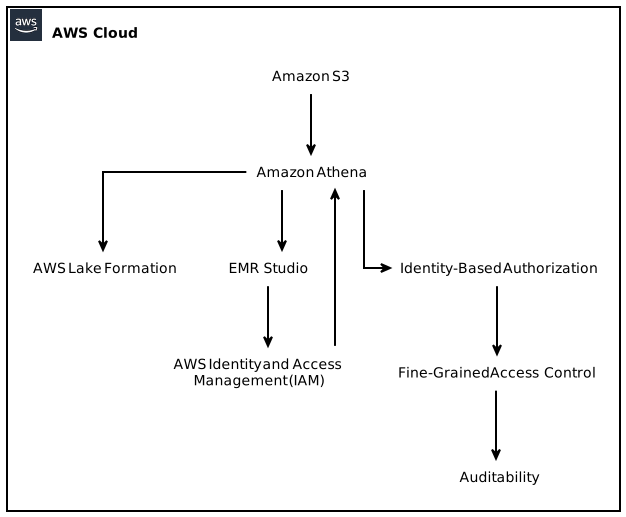
Amazon Athena is a powerful query service that allows users to analyze data directly in Amazon S3 using SQL. With the latest update, Amazon Athena now supports user identities for data access and audit. This article will explore the new functionality and how it can benefit users. We will also discuss additional technical points, interesting facts, and SEO aspects related to this feature.
Table of Contents
- Background on Amazon Athena
- Overview of User Identities for Data Access and Audit
- Enabling Trusted Identity Propagation
- Using Corporate Identities in EMR Studio
- Fine-Grained Access Control
- Improving Security with Identity-Based Authorization
- Auditing Athena Query Workflows
- Additional Technical Points
- Interesting Facts about User Identities in Athena
- SEO Best Practices for Amazon Athena and User Identities
- Conclusion
1. Background on Amazon Athena
Amazon Athena is a serverless interactive query service that allows users to run SQL queries directly on data stored in Amazon S3. It allows users to analyze large datasets without the need to set up and manage complex infrastructure. With Amazon Athena, users can query data in various formats, including CSV, JSON, Avro, and Parquet.
2. Overview of User Identities for Data Access and Audit
With the latest update, Amazon Athena now supports user identities for data access and audit. This means that administrators can enable trusted identity propagation for Athena SQL use cases when creating a new workgroup. This feature allows data analysts to use their corporate identities to access the Athena editor in EMR Studio.
3. Enabling Trusted Identity Propagation
To enable trusted identity propagation, administrators need to create a new workgroup in Amazon Athena and set the trusted identity propagation setting to enabled. This configuration ensures that the identity of the data analyst is propagated all the way to AWS Lake Formation, which authorizes data access.
4. Using Corporate Identities in EMR Studio
EMR Studio is an integrated development environment (IDE) for data scientists and engineers. With the new update, data analysts can use their corporate identities to access the Athena editor in EMR Studio. This means that they can run queries using their existing credentials, eliminating the need to manage separate Athena credentials.
5. Fine-Grained Access Control
The introduction of user identities for data access and audit in Amazon Athena also improves end-to-end security through identity-based fine-grained access control. This means that administrators can define granular permissions for different users or groups, ensuring that only authorized individuals can access and query specific datasets.
6. Improving Security with Identity-Based Authorization
Identity-based authorization enhances the security of Athena query workflows. When a query is executed, AWS Lake Formation checks the identity of the data analyst and authorizes data access based on the defined permissions. This ensures that sensitive data remains protected and only accessible to authorized individuals.
7. Auditing Athena Query Workflows
Another significant benefit of user identities in Amazon Athena is the ability to audit query workflows. The identity propagation allows for a clear audit trail, providing insights into who executed the query and when. This auditability strengthens compliance requirements and ensures accountability for data access and analysis.
8. Additional Technical Points
- Integration with AWS Identity and Access Management (IAM): User identities for data access and audit in Athena seamlessly integrate with IAM, making it easy for administrators to manage permissions.
- Multi-Factor Authentication (MFA) support: Athena supports MFA, providing an additional layer of security for user identities accessing query capabilities.
- Support for AWS CloudTrail: The integration with CloudTrail allows administrators to monitor and log all activities related to Athena query execution, including user identities and accessed datasets.
- Performance optimization: With the new user identity functionality, administrators can optimize performance by applying fine-grained access control at the dataset level, improving query execution times.
9. Interesting Facts about User Identities in Athena
- User identities in Athena leverage AWS Lake Formation’s robust security framework, ensuring data protection and compliance.
- The integration of corporate identities in EMR Studio simplifies the onboarding process for data analysts, reducing administrative overhead.
- The fine-grained access control feature enables administrators to define access permissions at the column level, offering enhanced data security.
- User identities for data access and audit support cross-account access, allowing users to query datasets from multiple AWS accounts.
- Amazon Athena is HIPAA eligible, making it suitable for healthcare organizations that require strict data privacy and security.
10. SEO Best Practices for Amazon Athena and User Identities
- Include relevant keywords throughout the article, such as “Amazon Athena,” “user identities,” “data access,” “audit,” and “trusted identity propagation.”
- Use header tags to structure the content and improve readability.
- Implement proper meta tags and title tags to optimize search engine visibility.
- Include relevant internal and external links to provide additional value to readers and improve SEO.
- Optimize images with appropriate alt text and file names.
- Write high-quality content that provides valuable information to the readers.
- Conduct keyword research to identify search terms and phrases that can drive organic traffic to the article.
- Promote the article through social media channels and relevant online communities.
- Monitor SEO performance using tools like Google Analytics and adjust the strategy accordingly.
11. Conclusion
The introduction of user identities for data access and audit in Amazon Athena brings numerous benefits to data analysts and administrators. It simplifies onboarding through single-sign-on, improves security through fine-grained access control and identity-based authorization, and provides clear auditability for query workflows. By leveraging this functionality, users can enhance their experience with Amazon Athena and ensure the protection and compliance of their data.