

Introduction
In this guide, we will explore the exciting news that Amazon Linux has announced support for Ansible and Corretto 21 with the AL2023.2 release. We will dive deep into the significance of this announcement and provide a comprehensive understanding of the technical aspects involved. Additionally, we will focus on how this update impacts SEO strategies and offer interesting and relevant points for technical enthusiasts. So, let’s get started!
Table of Contents
- Introduction
- What is Amazon Linux?
- Ansible: Automation made easy
- Corretto: A powerful Java development platform
- AL2023.2 Release
- How does the integration of Ansible and Corretto benefit developers?
- Technical deep dive into Ansible and Corretto integration
- Ansible Playbooks for Amazon Linux
- Corretto 21: Key Features and Improvements
- Using Ansible with Corretto: Best practices
- Enhancing SEO with Amazon Linux, Ansible, and Corretto
- Understanding SEO and its importance
- Leveraging Amazon Linux for better search rankings
- Optimizing Ansible for SEO efficiency
- Leveraging Corretto to enhance SEO performance
- Other interesting points
- Integration with AWS services
- Development trends and future roadmap
- Community support and resources
- Conclusion
2. What is Amazon Linux?
Amazon Linux is a Linux-based operating system offered by Amazon Web Services (AWS) that is specifically designed for running applications on the Amazon Elastic Compute Cloud (EC2). It provides an optimized environment for cloud-based applications, with a focus on security, scalability, and performance.
Amazon Linux is built using components from other popular Linux distributions such as Fedora, CentOS, and Arch Linux. It includes a package manager called yum, which simplifies the process of installing, updating, and managing software packages.
With the AL2023.2 release, Amazon Linux now supports the integration of Ansible and Corretto 21, bringing new capabilities and flexibility for developers and system administrators.
3. Ansible: Automation made easy
Ansible is an open-source automation tool that simplifies the process of configuring and managing IT infrastructure. It uses a declarative language to describe the desired state of the system and automatically orchestrates the necessary steps to achieve that state.
With Ansible, developers and system administrators can automate repetitive tasks, streamline deployments, and ensure consistency across multiple systems. It eliminates the need for writing complex scripts or manual configuration management, making it an essential tool for modern DevOps practices.
The integration of Ansible with Amazon Linux allows for seamless automation of various tasks, such as deploying applications, managing system configurations, and performing software updates.
4. Corretto: A powerful Java development platform
Corretto is an open-source, production-ready distribution of the Java Development Kit (JDK) offered by Amazon. It provides a reliable and performant platform for developing and running Java applications.
Corretto is based on OpenJDK, the reference implementation of the Java SE platform, and is designed to be compatible with the Java SE standard. It undergoes rigorous testing and certification processes to ensure stability and reliability.
One of the key advantages of Corretto is its long-term support, which includes regular performance enhancements, bug fixes, and security updates. With the AL2023.2 release, Amazon Linux now supports Corretto 21, offering developers a cutting-edge Java development environment.
5. AL2023.2 Release
The AL2023.2 release of Amazon Linux marks a significant milestone by introducing support for Ansible and Corretto 21. This update brings enhanced automation capabilities and a robust Java development platform to the Amazon Linux ecosystem.
Developers and system administrators can now leverage Ansible to automate complex tasks and streamline their workflows on Amazon Linux instances. Additionally, they can take advantage of Corretto 21 to develop and run Java applications with improved performance and security.
This release also includes numerous bug fixes, performance optimizations, and updated packages to ensure a stable and efficient operating system for cloud-based applications.
6. How does the integration of Ansible and Corretto benefit developers?
The integration of Ansible and Corretto within the Amazon Linux environment brings several benefits for developers and system administrators. Let’s explore some of the key advantages:
Simplified Infrastructure Management
With Ansible, managing infrastructure becomes effortless. Developers can define the desired state of their systems using Ansible Playbooks, which are human-readable files written in YAML. These Playbooks can then be executed to automatically provision and configure Amazon Linux instances, reducing manual effort and eliminating configuration drift.
Streamlined Application Deployment
Ansible simplifies the process of deploying applications onto Amazon Linux instances. By defining the deployment steps in Ansible Playbooks, developers can easily replicate the deployment across multiple environments, ensuring consistency and minimizing errors. This streamlined deployment process saves time and allows for faster iteration and testing of applications.
Reliable and Secure Java Development
Corretto 21 provides developers with a stable and secure Java development platform on Amazon Linux. It includes performance enhancements, bug fixes, and security updates, ensuring that Java applications run optimally and are protected against vulnerabilities. The integration of Corretto with Ansible allows for automated installation and configuration of Corretto across multiple Amazon Linux instances, making it easier to maintain a standardized Java environment.
Enhanced Collaboration and Productivity
Ansible enables collaboration between developers and system administrators by providing a unified platform for infrastructure management. With Ansible, developers can define the required infrastructure as code, allowing system administrators to easily provision and configure the necessary resources. This collaboration improves productivity, reduces the risk of miscommunication, and fosters a DevOps culture within organizations.
7. Technical deep dive into Ansible and Corretto integration
In this section, we will delve deeper into the technical aspects of integrating Ansible and Corretto within the Amazon Linux environment. We will explore various considerations, best practices, and key features related to Ansible Playbooks for Amazon Linux and the new features introduced in Corretto 21.
Ansible Playbooks for Amazon Linux
Ansible Playbooks are files written in YAML format that define a set of tasks to be executed on a remote system. These Playbooks are the heart of Ansible automation and allow developers to describe the desired state of their systems.
For Amazon Linux instances, developers can create Ansible Playbooks that perform a wide range of tasks, such as package installation, configuration file management, user management, and more. These Playbooks can be executed against multiple Amazon Linux instances simultaneously, ensuring consistent configurations across the infrastructure.
Here are some key considerations and best practices for using Ansible Playbooks with Amazon Linux:
- Ensure Ansible is properly installed on your local system and configured to communicate with the target Amazon Linux instances.
- Structure your Playbooks in a modular and reusable manner to promote maintainability and reusability.
- Leverage Ansible’s extensive module library to simplify common tasks, such as package management, file management, and user management.
- Use Ansible’s variable system to define reusable variables and promote configuration consistency.
- Utilize Ansible roles to encapsulate complex functionality and promote code reuse across multiple Playbooks.
- Follow Ansible best practices, such as idempotence, to ensure that Playbooks can be safely executed multiple times without causing unintended side effects.
- Test your Playbooks thoroughly in non-production environments before deploying them to production systems.
Corretto 21: Key Features and Improvements
Corretto 21, released with the AL2023.2 version of Amazon Linux, introduces several key features and improvements over its predecessors. Let’s take a closer look at some of these noteworthy enhancements:
- Improved performance: Corretto 21 includes various performance optimizations, such as reduced startup time and optimized memory usage. These improvements result in faster and more efficient execution of Java applications on Amazon Linux instances.
- Enhanced security: Security is a top priority for Corretto. With the AL2023.2 release, Corretto 21 incorporates the latest security patches and updates, ensuring that Java applications running on Amazon Linux instances remain secure and protected against known vulnerabilities.
- Long-term support: Corretto 21 offers long-term support, which means that developers can rely on regular updates, bug fixes, and security patches for an extended period. This ensures stability and minimizes the need for frequent updates and migrations.
- Compatibility with Java SE: Corretto is certified as compatible with the Java SE standard, providing a reliable and compliant Java development platform. Developers can confidently develop and run Java applications on Amazon Linux instances using Corretto 21, knowing that their applications adhere to the industry-standard specifications.
Using Ansible with Corretto: Best practices
When integrating Ansible with Corretto on Amazon Linux, it is essential to follow best practices to optimize the deployment and configuration process. Here are some recommended practices:
- Use Ansible Playbooks to automate the installation and configuration of Corretto across multiple Amazon Linux instances. This ensures consistency and reduces the manual effort required to set up the Java development environment.
- Utilize Ansible roles to encapsulate the Corretto installation and configuration tasks. This promotes code reuse and simplifies the management of complex system configurations.
- Leverage Ansible’s conditional statements and handlers to handle idempotent tasks related to Corretto. This allows for efficient management of the Java environment, ensuring that the required state is maintained without unnecessary actions.
- Regularly update the Corretto version specified in your Ansible Playbooks to stay up to date with the latest performance enhancements and security fixes.
- Test your Ansible Playbooks that involve Corretto installations and configurations in a staging or test environment before deploying them to production systems. This ensures that the deployment process is reliable and reduces the risk of any unexpected issues.
8. Enhancing SEO with Amazon Linux, Ansible, and Corretto
The integration of Amazon Linux, Ansible, and Corretto offers unique opportunities to enhance SEO (Search Engine Optimization) strategies for websites and applications running on this stack. With the increasing competition for online visibility, it is crucial to leverage every advantage available. Let us explore how Amazon Linux, Ansible, and Corretto can contribute to improved search rankings and SEO efficiency.
Understanding SEO and its importance
SEO refers to the practice of optimizing a website or application to improve its visibility in search engine results. The goal is to attract organic traffic from search engine users who are actively searching for relevant information or services.
Better search rankings can result in increased visibility, website traffic, and potentially higher conversion rates. Therefore, it is essential to align SEO strategies with the latest technological advancements to stay ahead of the competition.
Leveraging Amazon Linux for better search rankings
Amazon Linux provides a reliable and optimized environment for hosting websites and applications. Leveraging Amazon Linux’s performance and scalability features can positively impact website loading times, which is a crucial factor for search engine rankings.
Here are some technical considerations to optimize Amazon Linux for better search rankings:
- Utilize Amazon EC2 instance types that offer ample resources for your website’s specific requirements. Take into account factors such as CPU, memory, and network performance to ensure optimal performance.
- Implement caching mechanisms, such as Amazon CloudFront, to improve the delivery speed of static and dynamic content. This reduces the load on your Amazon Linux instances and improves overall website performance.
- Optimize your web server configuration for performance. Tune parameters such as connection limits, request handling, and caching policies to maximize the performance of your website or application.
- Regularly monitor and analyze website performance metrics using tools like Amazon CloudWatch. Identify bottlenecks and areas for improvement to provide the best user experience and search engine crawling experience.
By implementing these best practices, you can ensure that your website or application running on Amazon Linux is optimized for search engine indexing and ranking algorithms.
Optimizing Ansible for SEO efficiency
Ansible’s automation capabilities can directly contribute to SEO efficiency by streamlining various optimization processes. Consider the following points to maximize the impact of Ansible on your SEO efforts:
- Automate the deployment and configuration of your website or application with Ansible Playbooks. This ensures consistency and reduces human error, leading to a more reliable and efficient deployment process.
- Leverage Ansible’s templating capabilities to dynamically generate SEO-friendly metadata, such as title tags and meta descriptions, for web pages. This enables you to optimize these critical elements for search engine visibility without manual intervention.
- Use Ansible to automate the generation of XML sitemaps, which are crucial for search engine crawlers to discover and index your website’s pages. Regularly update and submit your sitemap to search engines to ensure comprehensive crawling and indexing.
- Implement automated monitoring and alerting for SEO-related issues using Ansible. This allows you to proactively identify and address any technical SEO issues, such as broken links, duplicate content, or slow-loading pages.
By automating these SEO processes with Ansible, you can ensure a consistent and efficient approach to optimizing your website or application for search engine visibility.
Leveraging Corretto to enhance SEO performance
Java-based websites and applications can benefit from Corretto’s performance enhancements and security features. Optimized Java code running on Corretto can lead to faster website loading times and improved user experience, which are factors considered by search engine algorithms.
Here are some ways to leverage Corretto for SEO performance:
- Develop and optimize Java-based web applications using Corretto’s performance-enhancing features. For example, leverage Corretto’s improved memory usage and reduced startup time to ensure optimal performance even under heavy loads.
- Regularly update to the latest version of Corretto to take advantage of performance enhancements, bug fixes, and security updates. This ensures that your Java-based website or application running on Amazon Linux remains up to date and optimized for search engine crawling and rendering.
- Monitor and optimize Java application performance using tools like Amazon CloudWatch. Identify performance bottlenecks and fine-tune your Java code to maximize efficiency and responsiveness.
- Leverage Corretto’s compatibility with the Java SE standard to access additional SEO-related tools and libraries. Java offers various SEO-specific libraries for tasks like URL canonicalization, XML manipulation, and content analysis. Utilizing these libraries can streamline the implementation of SEO best practices.
By leveraging Corretto’s performance benefits and compatibility with SEO-specific libraries, you can optimize your Java-based website or application for better search engine visibility.
9. Other interesting points
In addition to the technical and SEO aspects, there are several other interesting points worth exploring regarding the integration of Ansible and Corretto with Amazon Linux. Let’s take a look at some of these points:
Integration with AWS services
Amazon Linux, being an AWS product, seamlessly integrates with various AWS services. This integration enhances the overall development and deployment experience by enabling easy access to cloud-based resources.
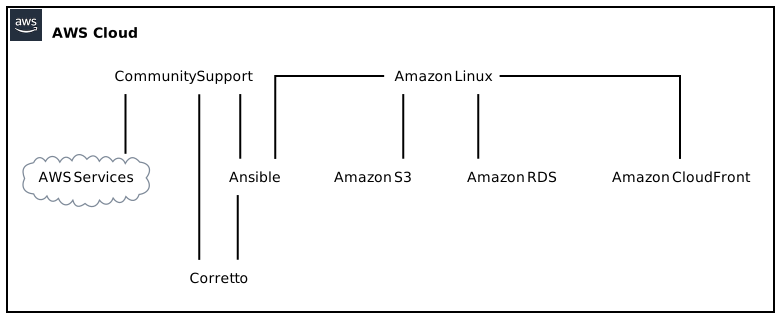
Developers can leverage Ansible to seamlessly automate interactions with various AWS services, such as Amazon S3 for file management, Amazon RDS for database management, or Amazon CloudFront for content delivery. The integration of Corretto with Amazon Linux further enhances the developer experience by providing a Java development platform that is tightly integrated with AWS.
Development trends and future roadmap
The integration of Ansible and Corretto with Amazon Linux highlights the growing trend of DevOps practices and the importance of automation and efficiency in software development and infrastructure management. Monitoring industry trends and staying up to date with the latest advancements can offer valuable insights into future developments and possibilities.
Amazon continuously updates and improves its products and services, including Amazon Linux, Ansible, and Corretto. It is advisable to stay informed about new releases, feature enhancements, and best practices to extract the maximum value from these innovations.
Community support and resources
The success of any technology stack relies on the support and engagement of a vibrant community. Various forums, online communities, and documentation resources are available to help developers and system administrators effectively utilize Amazon Linux, Ansible, and Corretto.
Engaging with the community can provide valuable insights, best practices, and solutions to common challenges. Furthermore, extensive documentation and tutorials are available to facilitate learning and exploration of the technical aspects of these tools.
10. Conclusion
The integration of Ansible and Corretto with Amazon Linux opens up exciting possibilities for developers and system administrators. It simplifies infrastructure management, streamlines application deployments, and provides a powerful Java development platform. By optimizing the stack for SEO, developers can enhance their website’s search engine visibility and ensure maximum organic traffic.
In this guide, we explored the key features, benefits, and technical aspects of the Ansible and Corretto integration with Amazon Linux. We discussed best practices, optimization techniques, and the importance of community engagement. By harnessing the power of Amazon Linux, Ansible, and Corretto, developers can boost their productivity, improve application performance, and enhance SEO strategies.
Stay up to date with the latest developments in Amazon Linux, Ansible, and Corretto to leverage the full potential of these tools and elevate your development and deployment workflows to new heights.