
Introduction
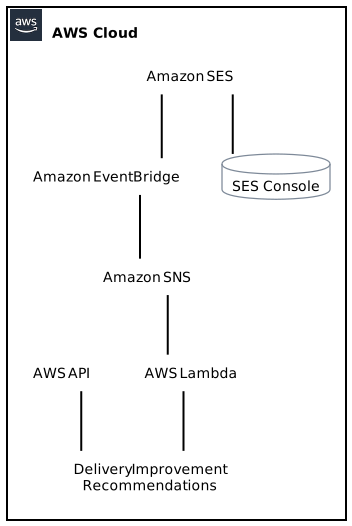
Email deliverability is critical for businesses to ensure that their messages reach the intended recipients. Amazon Simple Email Service (SES) has been a popular choice for businesses to send emails at scale, and now it offers a new feature called notifications for delivery improvement recommendations. In this guide, we will explore how you can leverage this feature to optimize your email deliverability and engagement. We will also discuss additional technical and SEO-related points to help you make the most out of this new capability.
Table of Contents
- Overview of Amazon SES
- Introducing Notifications for Delivery Improvement Recommendations
- Benefits of Using Notifications
- Implementing Notifications
- Setting Up Amazon EventBridge
- Routing Notifications to Amazon SNS
- Triggering Custom Workflows with AWS Lambda
- Managing Sending Configurations
- Technical Points to Consider
- Monitoring Recommendations with the SES Console
- Monitoring Recommendations through the AWS API
- Customizing Notification Formats
- SEO Considerations for Email Deliverability
- Optimizing Email Content for Search Engines
- Improving Email Reputation
- Analyzing Delivery Metrics
- Best Practices for Email Deliverability
- Maintaining a Clean Email List
- Proper Authentication and Authorization
- Understanding Email Filters and Spam Rules
- Implementing Sender Policy Framework (SPF) and Domain Keys Identified Mail (DKIM)
- Configuring Reverse DNS (rDNS) and Domain-based Message Authentication, Reporting, and Conformance (DMARC)
- Conclusion
1. Overview of Amazon SES
[Provide a brief introduction to Amazon Simple Email Service (SES), highlighting its features, benefits, and popularity among businesses.]
2. Introducing Notifications for Delivery Improvement Recommendations
[Explain the new feature of notifications for delivery improvement recommendations, emphasizing its significance in managing and improving email deliverability.]
3. Benefits of Using Notifications
[Enumerate the benefits of leveraging notifications for delivery improvement recommendations, such as staying informed about potential issues, resolving existing recommendations, and maintaining optimal email deliverability.]
4. Implementing Notifications
4.1 Setting Up Amazon EventBridge
[Guide users through the process of setting up Amazon EventBridge to enable notifications for delivery improvement recommendations.]
4.2 Routing Notifications to Amazon SNS
[Explain how to route notifications to Amazon Simple Notification Service (SNS) to receive email or text notifications.]
4.3 Triggering Custom Workflows with AWS Lambda
[Guide users on how to leverage AWS Lambda to trigger custom workflows based on the notifications received.]
4.4 Managing Sending Configurations
[Discuss the flexibility provided by SES in terms of choosing the channel for receiving notifications and staying up-to-date with sending configurations.]
5. Technical Points to Consider
5.1 Monitoring Recommendations with the SES Console
[Highlight how users can utilize the SES console to monitor delivery improvement recommendations and take necessary actions.]
5.2 Monitoring Recommendations through the AWS API
[Explain how to programmatically access and monitor delivery improvement recommendations using the AWS API.]
5.3 Customizing Notification Formats
[Discuss the ability to customize the format and content of notifications for better integration with existing systems and monitoring tools.]
6. SEO Considerations for Email Deliverability
6.1 Optimizing Email Content for Search Engines
[Explain how to optimize email content to improve visibility in search engine results.]
6.2 Improving Email Reputation
[Provide tips on maintaining a good email reputation, such as using reputable sending domains and complying with email industry standards.]
6.3 Analyzing Delivery Metrics
[Discuss the importance of analyzing delivery metrics to identify patterns and optimize email deliverability.]
7. Best Practices for Email Deliverability
7.1 Maintaining a Clean Email List
[Discuss the significance of maintaining a clean email list and techniques to minimize bounce rates and spam complaints.]
7.2 Proper Authentication and Authorization
[Emphasize the importance of proper email authentication and authorization, including SPF, DKIM, and DMARC setup.]
7.3 Understanding Email Filters and Spam Rules
[Provide insights into email filters and spam rules to help businesses avoid common pitfalls and maximize email deliverability.]
7.4 Implementing Sender Policy Framework (SPF) and Domain Keys Identified Mail (DKIM)
[In-depth guide on setting up SPF and DKIM for improved email deliverability.]
7.5 Configuring Reverse DNS (rDNS) and Domain-based Message Authentication, Reporting, and Conformance (DMARC)
[Explain the significance of rDNS and DMARC configuration in establishing email trustworthiness and reducing the chances of emails being marked as spam.]
8. Conclusion
[Conclude the guide by summarizing the key points and benefits of leveraging Amazon SES notifications for delivery improvement recommendations.]
This guide provides a comprehensive overview of using Amazon SES notifications for delivery improvement recommendations, covering technical implementation, SEO considerations, and best practices. By following the guidelines presented in this article, businesses can enhance their email deliverability and engagement, ultimately improving their customer communication and success.