
Introduction
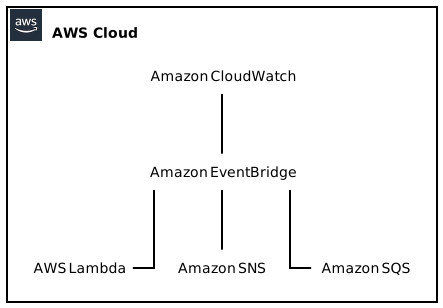
As event-driven architectures become more popular, it is crucial to monitor and optimize the performance of event buses to ensure the smooth operation of your applications. With the recent update, Amazon EventBridge now supports 22 additional Amazon CloudWatch metrics that provide valuable insights into the performance of your event buses. In this guide, we will explore these new metrics and discuss how you can leverage them to proactively identify potential issues and improve the overall efficiency of your event-driven applications. We will also provide additional technical details and highlight some interesting points related to search engine optimization (SEO) for your convenience.
Table of Contents
- Understanding the Importance of Metrics in Event-Driven Architectures
1.1 Benefits of Monitoring Event Buses - Overview of Amazon EventBridge and Amazon CloudWatch Metrics
2.1 What is Amazon EventBridge?
2.2 What are Amazon CloudWatch Metrics? - New Amazon CloudWatch Metrics for Event Buses
3.1 API Latency
3.2 Event Payload Size
3.3 Successful Events
3.4 Failed Events
3.5 Throttled Events
3.6 Retries
3.7 Throttling
3.8 End-to-End Latency - Leveraging Amazon CloudWatch Metrics to Improve Performance
4.1 Setting Up CloudWatch Alarms
4.2 Analyzing Metrics and Identifying Bottlenecks
4.3 Scaling Event Buses to Meet Service Quotas
4.4 Optimizing Retry and Throttling Settings - SEO Best Practices for Event-Driven Applications
5.1 Optimizing Event and Payload Naming
5.2 Implementing Schema Markup
5.3 Sitemap Generation for Event Buses
5.4 Leveraging Canonical URLs for Duplicate Events - Conclusion
1. Understanding the Importance of Metrics in Event-Driven Architectures
Event-driven architectures have gained popularity due to their scalability, flexibility, and loosely-coupled nature. However, monitoring the performance of event buses is crucial to identify potential issues and ensure the smooth operation of your applications.
1.1 Benefits of Monitoring Event Buses
By monitoring event buses, you can gain valuable insights into the behavior of your event-driven applications and take proactive measures to optimize their performance. Some of the key benefits of monitoring event buses include:
- Proactively identifying bottlenecks and performance issues
- Optimizing resource allocation to meet service quotas
- Analyzing trends and patterns to make informed architectural decisions
- Ensuring reliable event delivery through accurate monitoring
Now, let’s dive deeper into the capabilities provided by Amazon EventBridge and Amazon CloudWatch Metrics.
2. Overview of Amazon EventBridge and Amazon CloudWatch Metrics
2.1 What is Amazon EventBridge?
Amazon EventBridge is a fully managed event bus service that makes it easy to connect different applications and AWS services using events. It allows you to decouple your applications and services, enabling them to communicate asynchronously. With EventBridge, you can build scalable and loosely-coupled architectures, simplifying the development and maintenance of event-driven applications.
2.2 What are Amazon CloudWatch Metrics?
Amazon CloudWatch Metrics provides you with detailed monitoring and observation of your AWS resources and applications. It collects and processes raw data from various sources and transforms it into actionable insights through metrics, alarms, and dashboards. With CloudWatch Metrics, you can monitor the performance and health of your services, enabling you to make informed decisions and quickly address any issues that may arise.
Now that we have a basic understanding of Amazon EventBridge and Amazon CloudWatch Metrics, let’s explore the new metrics added for event buses.
3. New Amazon CloudWatch Metrics for Event Buses
The addition of 22 new Amazon CloudWatch Metrics for event buses allows you to gain deeper insight into the performance of your event-driven applications. Let’s explore some of these metrics and understand how they can be leveraged to improve your application’s efficiency.
3.1 API Latency
API latency metric measures the time taken for an API call to EventBridge to complete. Monitoring this metric helps you identify potential performance bottlenecks in your event bus. By analyzing the API latency, you can optimize the performance of your event-driven applications and improve their responsiveness.
3.2 Event Payload Size
The event payload size metric provides you with information about the size of events being published to your event bus. This metric is crucial for understanding the impact of event payload size on the performance and scalability of your applications. Monitoring the event payload size helps you optimize the size of your events and ensure efficient event processing.
3.3 Successful Events
The number of successful events metric measures the count of events that have been successfully processed by your event bus. Monitoring this metric helps you ensure the reliable delivery of events and validates the overall health of your event-driven applications. By closely monitoring successful events, you can identify any anomalies and take necessary actions to maintain the integrity of your system.
3.4 Failed Events
The number of failed events metric indicates the count of events that have failed to be processed by your event bus. Monitoring this metric allows you to quickly identify and address any issues that may lead to event processing failures. By minimizing the number of failed events, you can ensure the smooth operation of your event-driven applications and prevent any potential data loss.
3.5 Throttled Events
Throttled events metric represents the count of events that were throttled due to exceeding the service quotas. Monitoring this metric is essential to ensure your event buses are optimized to handle the incoming event traffic. By analyzing the throttled events, you can take necessary measures to scale your event bus and prevent any disruptions caused by throttling.
3.6 Retries
Retries metric provides visibility into the number of times an event delivery to a target, such as AWS Lambda, has been retried. Monitoring this metric helps you identify any issues related to event delivery and assess the impact of retries on the overall performance of your applications. By optimizing the retry settings, you can minimize the impact of retries and improve the efficiency of event processing.
3.7 Throttling
Throttling metric measures the number of times an event delivery to a target has been throttled. Monitoring this metric allows you to understand the impact of event throttling on your applications and take necessary steps to optimize the performance. By analyzing the throttling metric, you can adjust your event bus configuration and ensure uninterrupted event delivery.
3.8 End-to-End Latency
End-to-end latency metric provides insights into the time taken for an event to be delivered from EventBridge to a target and the subsequent response time from the target. Monitoring this metric helps you understand the overall latency of your event-driven applications and identify potential delays in event processing. By optimizing the end-to-end latency, you can improve the responsiveness of your applications and enhance the user experience.
Now that we have covered the new Amazon CloudWatch Metrics for event buses, let’s explore how you can leverage these metrics to improve the performance of your event-driven applications.
4. Leveraging Amazon CloudWatch Metrics to Improve Performance
Monitoring Amazon CloudWatch Metrics for event buses is crucial to identify potential issues and optimize the performance of your event-driven applications. Let’s discuss a few key strategies to make the most out of these metrics:
4.1 Setting Up CloudWatch Alarms
CloudWatch alarms allow you to set thresholds on specific metrics and trigger notifications when those thresholds are breached. By setting up alarms for important metrics such as API latency, event payload size, and throttling, you can proactively identify and respond to any potential issues. This helps ensure the smooth operation of your applications and minimizes any impact on user experience.
4.2 Analyzing Metrics and Identifying Bottlenecks
Regular analysis of CloudWatch Metrics provides valuable insights into the behavior of your event buses. By monitoring metrics such as successful events, failed events, and throttled events, you can identify bottlenecks and performance issues. By understanding the root cause of these issues, you can take appropriate actions to mitigate their impact and optimize the overall performance of your event-driven applications.
4.3 Scaling Event Buses to Meet Service Quotas
Throttled events metric helps you assess the extent to which your event bus may be underutilized or reaching its service quotas. By closely monitoring this metric, you can identify the need to scale your event bus and increase its capacity. Scaling your event bus ensures that you can handle increased event traffic and prevents disruptions caused by throttling.
4.4 Optimizing Retry and Throttling Settings
Metrics such as retries and throttling provide valuable insights into the delivery of events to targets. Analyzing these metrics helps you optimize the retry and throttling settings to minimize the impact on event processing. By fine-tuning these settings, you can improve the efficiency of event delivery and reduce unnecessary resource consumption.
Now that we have discussed the strategies for improving performance, let’s explore some additional technical points related to SEO for event-driven applications.
5. SEO Best Practices for Event-Driven Applications
Search Engine Optimization (SEO) is crucial for ensuring the visibility and discoverability of your web applications. Implementing SEO best practices for event-driven applications can help drive organic traffic and improve the overall success of your applications. Let’s explore a few SEO-related technical points specifically tailored for event-driven architectures:
5.1 Optimizing Event and Payload Naming
When defining events and their payloads, it is essential to use descriptive and keyword-rich names. By optimizing the event and payload naming, you improve the chances of search engines understanding the relevance and context of your events. This can help drive organic traffic and make your event-driven applications more discoverable.
5.2 Implementing Schema Markup
Schema markup provides search engines with structured data about your events, making it easier for them to understand and index your content. By implementing schema markup for your event-driven application, you can improve its visibility in search engine results and attract more organic traffic. Use appropriate schema types, such as Event or Product, to accurately represent the content of your events.
5.3 Sitemap Generation for Event Buses
Generating a sitemap specifically for your event bus can help search engines discover and crawl your events more efficiently. By including relevant events in the sitemap and submitting it to search engines, you ensure that your events are indexed and made available in search results. This enhances the visibility of your event-driven applications and increases their chances of being discovered by potential users.
5.4 Leveraging Canonical URLs for Duplicate Events
In event-driven architectures, it is common to have multiple duplicates of the same event due to retries or re-publishing. To effectively handle duplicates and improve SEO, it is recommended to leverage canonical URLs. By specifying the canonical URL for a particular event, you inform search engines about the preferred version of the event, reducing the chances of duplicate content penalties and enhancing your application’s SEO.
6. Conclusion
Monitoring and optimizing the performance of event buses is crucial for the smooth operation and efficiency of event-driven applications. With the addition of new Amazon CloudWatch Metrics for event buses, you now have access to valuable insights that can help identify potential issues and improve the overall performance. By leveraging these metrics, setting up alarms, analyzing bottlenecks, and optimizing retry settings, you can ensure the reliable delivery of events and maximize the efficiency of your applications.
Additionally, implementing SEO best practices for event-driven applications enhances their visibility and discoverability, driving organic traffic and increasing their chances of success. By optimizing event and payload naming, implementing schema markup, generating sitemaps, and leveraging canonical URLs, you can improve the SEO performance of your event-driven applications.
We hope this guide has provided you with a comprehensive understanding of monitoring and optimizing event buses with Amazon EventBridge and Amazon CloudWatch Metrics. By leveraging these tools and techniques, you can take full advantage of event-driven architectures and build highly scalable and efficient applications.